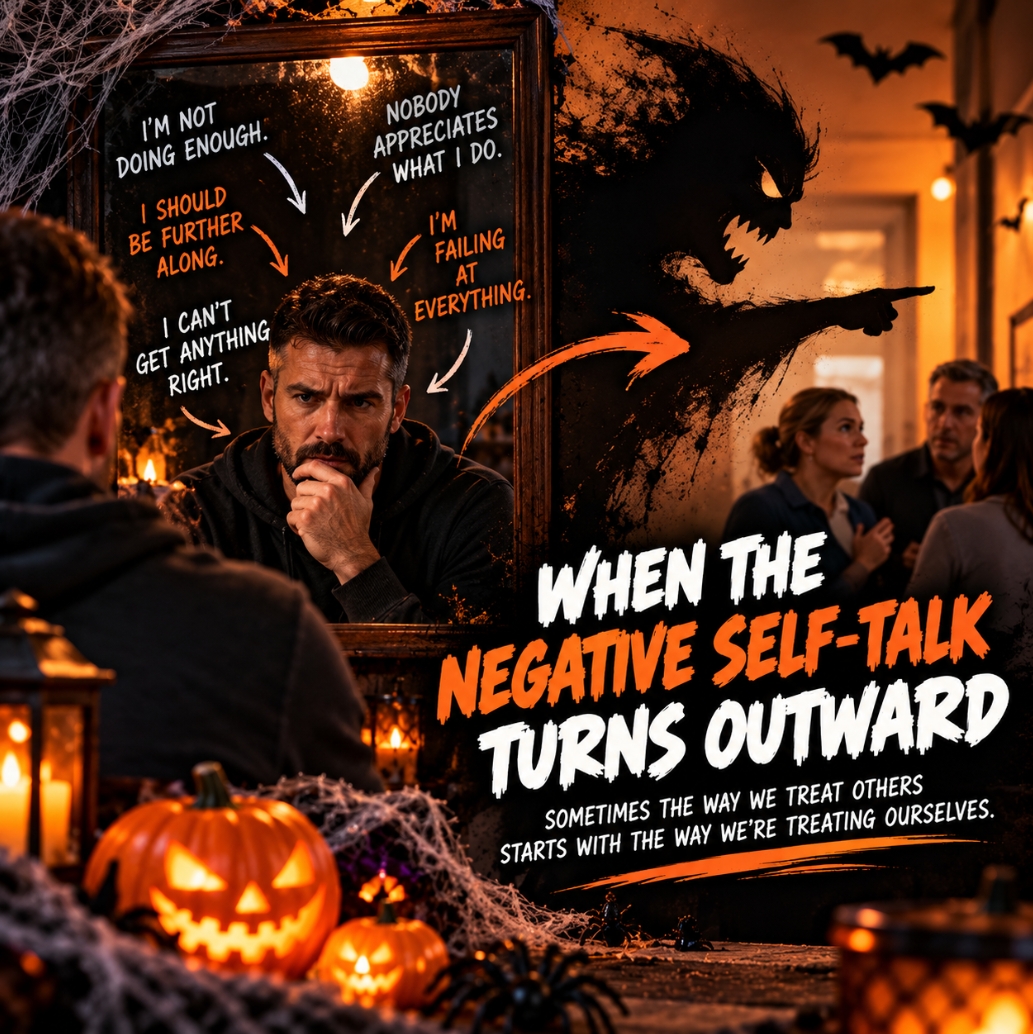
Men are really good at saying, “I’m fine,” even when we’re anything but.
And in senior living, that can be especially true.
We work in an industry built around taking care of other people. Residents need us. Families depend on us. Coworkers count on us. And somewhere in the middle of all that, we’re trying to be good husbands, fathers, friends, and providers.
That’s a lot to carry.
And while mental health affects everyone, I think men face a particular challenge. Many of us grew up believing that being strong meant handling things ourselves. Don’t complain. Don’t show weakness. Figure it out and keep moving.
I understand that mentality. I’ve lived it.
But there’s a difference between being strong and pretending nothing is wrong.
In senior living, we deal with things that don’t always leave us when our shift ends. We build relationships with residents, watch their health decline, experience loss, navigate difficult family situations, and carry the pressure of making sure people are cared for.
Then we go home and try to be fully present for the people waiting on us there.
And sometimes, we’re running on empty.
The problem is that men’s mental health struggles don’t always look like sadness. Sometimes they look like irritability, withdrawing from people, working constantly, losing interest in things we once enjoyed, or feeling like everyone needs something from us and we have nothing left to give.
So what can we do?
1. Stop answering “I’m fine” automatically. You don’t have to tell everyone your business, but find someone you trust and be willing to have an actual conversation.
2. Pay attention to changes in yourself. If you’re constantly frustrated, exhausted, disconnected, or no longer enjoying things you normally love, don’t just write it off as another stressful week.
3. Check on the other men around you. Not every conversation needs to be serious, but sometimes asking a coworker how he’s really doing can open a door he wasn’t comfortable opening himself.
4. Understand that asking for help is taking action. Talking to a counselor, physician, or mental health professional doesn’t mean you’ve failed to handle your responsibilities. It means you’re doing something about what’s affecting you.
And leadership has a responsibility here, too. We can’t tell employees to prioritize mental health while creating environments where admitting they’re overwhelmed is treated like weakness.
Here’s what I want the men in our industry to understand.
You are more than what you provide, what you accomplish, or how much responsibility you can carry.
Your value isn’t determined by how many problems you solve, how many hours you work, or whether everyone around you thinks you have it all together.
You can be dependable and still need support.
You can be strong and still struggle.
And you can be the person everyone turns to without having to carry everything alone.
This Movember, let’s make men’s mental health part of the conversation, not something we only acknowledge when someone reaches a breaking point.
Because taking care of everyone else shouldn’t come at the expense of losing yourself.