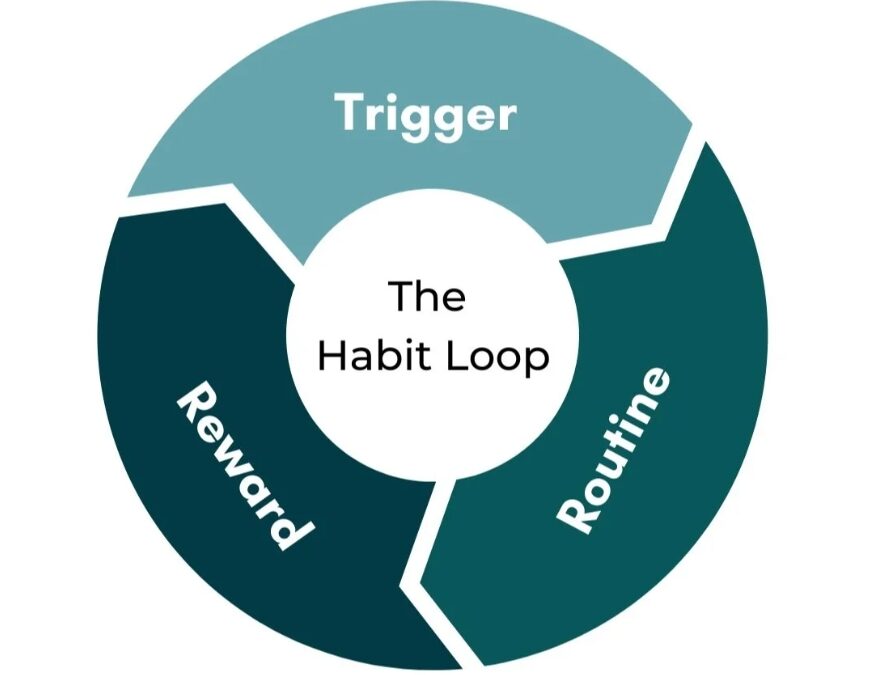
We love to label habits as good or bad…
But most habits aren’t bad — they’re just misplaced solutions.
That late-night snacking?
Stress relief.
Skipping workouts?
Mental fatigue or overwhelm.
Scrolling for hours?
Escape.
Every habit is solving something. If you don’t identify what, you’ll keep fighting the wrong battle.
Step 1: Stop attacking the habit — understand it
Instead of saying:
“I need to stop doing this”
Ask:
“What is this doing for me right now?”
Habits stick because they work… just not in a way that serves you long-term.
Step 2: Remove the all-or-nothing mindset
You don’t break habits by going from 0 → 100.
You break them by creating friction and awareness.
• Delay it by 10 minutes
• Reduce the frequency
• Change the environment
• Replace, don’t remove
Small wins rewire behavior. Big swings burn out.
Step 3: Make the better choice easier
Willpower is unreliable. Systems win.
• Put good food in sight, junk out of reach
• Schedule workouts like meetings
• Set app limits or remove triggers
• Build routines that don’t require thinking
If it’s easy, it happens. If it’s hard, it doesn’t.
Step 4: Identity > behavior
You don’t rise to your goals. You fall to your identity.
Start telling yourself:
“I’m someone who takes care of my body”
“I don’t skip workouts”
“I handle stress without self-sabotage”
Then prove it — one action at a time.
Step 5: Drop the guilt — focus on data
You messed up? Good. That’s data.
• What triggered it?
• What time did it happen?
• What was I feeling?
No emotion. Just information.
Data > drama.
Breaking habits isn’t about discipline.
It’s about awareness, environment, and identity.
You don’t need to be perfect.
You need to be consistent enough to change the story.Start small. Stay honest. Stack wins.