Most people think journaling means sitting in a coffee shop writing pages about your feelings while dramatic music plays in the background. It doesn’t.
Journaling is simply getting thoughts out of your head and onto paper. And for mental health, that matters more than people realize.
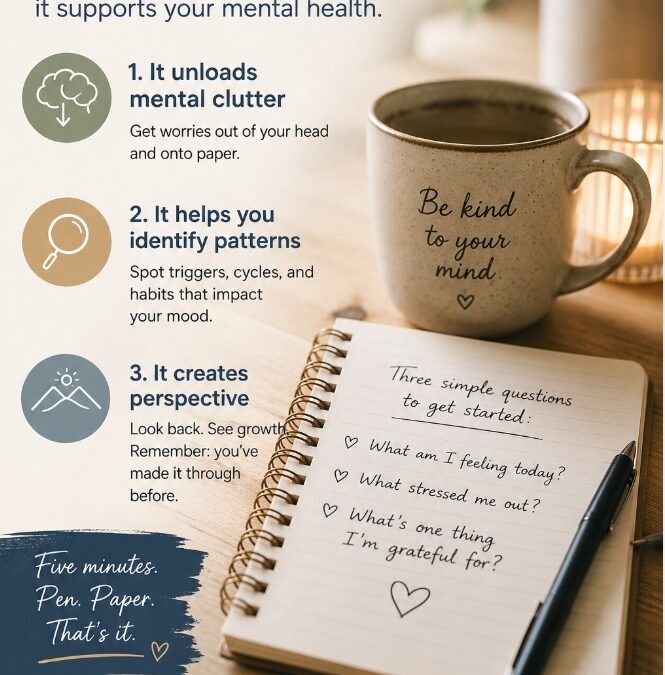
Three powerful ways journaling can help:
1. It unloads mental clutter
Your brain was built to process information—not store endless stress, worries, and reminders. Writing things down creates a release valve. Often the problem feels smaller once you can actually see it.
2. It helps you identify patterns
Ever notice stress seems to show up in cycles? Certain people, situations, lack of sleep, work demands, or habits can quietly impact your mood. Journaling helps connect dots you may otherwise miss.
3. It creates perspective
Bad days convince us that everything is falling apart. Looking back at previous entries can remind you of something important: you’ve made it through hard seasons before. Progress is easier to see when it’s written down.
You don’t need a perfect journal. You don’t need fancy prompts.
Start with three questions:
- What am I feeling today?
- What stressed me out?
- What’s one thing I’m grateful for?
Five minutes. Pen. Paper. That’s it.
Sometimes improving mental health isn’t adding more noise—it’s finally giving your mind a place to speak.