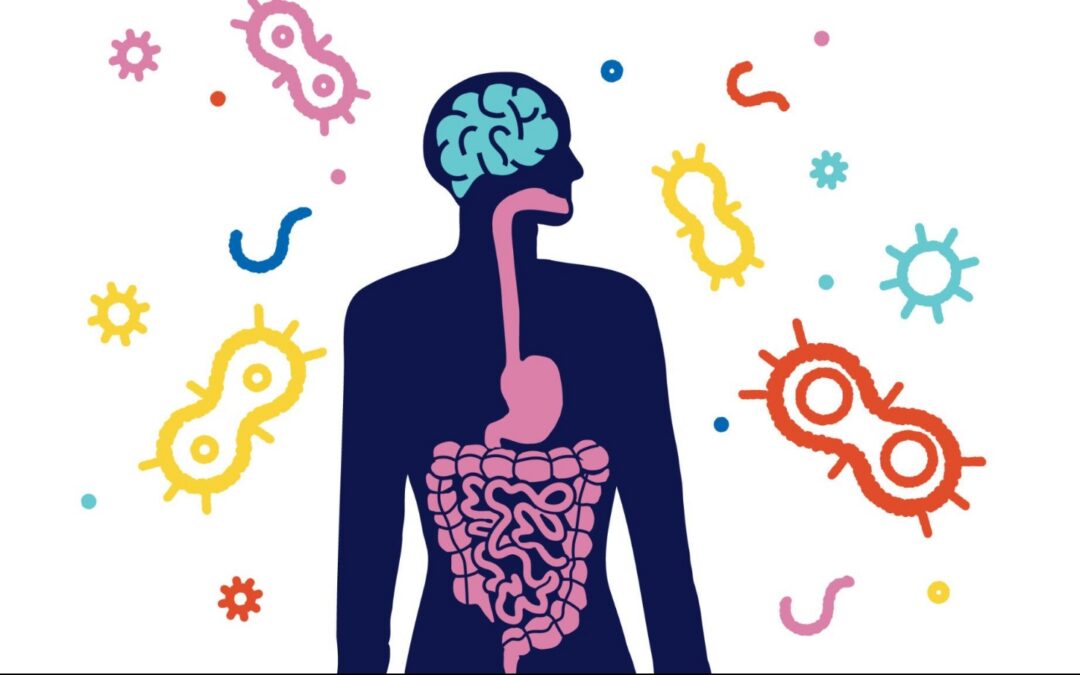
Ever had “butterflies” before a big event? Or felt nauseous when stressed? That’s not random. Your gut and your brain are in constant communication, and what happens in one can directly affect the other.
Researchers often call the gut the “second brain” because your digestive system houses millions of neurons and produces many of the same neurotransmitters involved in mood and emotional regulation.
Three ways your gut health may impact your mental health:
- Your gut helps produce mood-supporting chemicals
Nearly 90–95% of serotonin is produced in the gut. While gut serotonin doesn’t directly become brain serotonin, the health of your gut environment can influence signaling pathways tied to mood, stress, and emotional well-being. - Inflammation doesn’t stay in one place
An unhealthy gut can contribute to increased inflammation throughout the body. Chronic inflammation has been linked to increased risk of low mood, brain fog, fatigue, and stress-related issues. - Your gut bacteria can influence stress resilience
A balanced gut microbiome appears to play a role in how your body responds to stress. More diversity in gut bacteria has been associated with better overall mental and emotional health.
Ways to support both your gut and your mind:
- Eat more colorful fruits and vegetables
- Include fermented foods if tolerated (yogurt, kefir, sauerkraut)
- Prioritize fiber intake
- Manage stress levels
- Sleep like it matters… because it does
Take care of your gut, and you may be taking care of your brain too.
Your mind and stomach have been texting each other all day. Make sure they’re having a healthy conversation.