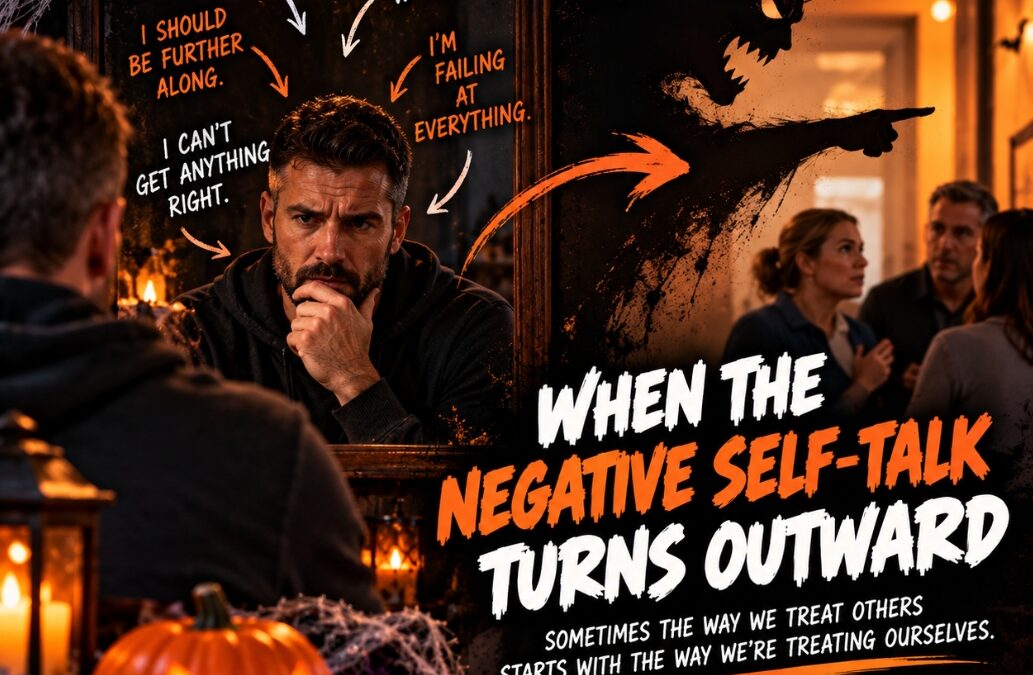
Sometimes the way we treat others starts with the way we’re treating ourselves.
Have you ever been in a terrible mood and realized that suddenly everyone around you seems to be getting on your nerves?
Your coworker asks a simple question, and you’re irritated. Someone makes a mistake, and you have absolutely no patience for it. Your spouse asks how your day was, and somehow that feels like one more thing you have to deal with.
And the worst part? Sometimes you don’t even realize you’re doing it.
Here’s something I’ve learned over the years.
When we’re constantly beating ourselves up internally, that negativity has a way of finding its way into how we treat other people.
Think about the conversations you have with yourself throughout the day.
“I’m not doing enough.”
“I should be further along by now.”
“Why can’t I get anything right?”
“Nobody appreciates what I do.”
“I’m failing at everything.”
Those thoughts might never leave your mouth, but that doesn’t mean they aren’t affecting you.
When you’re constantly frustrated with yourself, it’s easy to become frustrated with everyone else.
When you feel like nothing you do is good enough, you may start expecting perfection from the people around you.
And when you’re already carrying stress, disappointment, or resentment, even a small inconvenience can feel like the final straw.
Sometimes the person we’re taking our frustration out on isn’t the person we’re actually frustrated with.
And in senior living, that matters.
We work in an environment where patience, compassion, and understanding aren’t just nice qualities. They’re part of what residents, families, and coworkers depend on.
But we’re also human.
We have difficult days. We have things happening at home. We have insecurities, frustrations, financial pressures, and personal struggles that don’t magically disappear when we clock in.
And sometimes those things show up in our interactions before we even recognize what’s happening.
Three Ways to Catch It Before It Spreads
1. Pay attention to what you’re telling yourself.
When you catch yourself becoming unusually irritated, ask yourself a simple question:
“Am I actually upset about what’s happening right now, or am I carrying something else into this situation?”
Maybe you’re exhausted. Maybe you made a mistake earlier and haven’t let it go. Maybe you’re feeling overwhelmed or unappreciated.
Understanding where your frustration is coming from doesn’t automatically fix it, but it gives you a chance to respond instead of simply react.
2. Give yourself the same grace you’d give someone else.
This one can be difficult, especially for those of us who hold ourselves to high standards.
We can be incredibly understanding when someone else makes a mistake, but when we make one, we replay it in our heads for hours.
There’s nothing wrong with accountability. There’s nothing wrong with wanting to improve.
But constantly tearing yourself down isn’t the same thing as holding yourself accountable.
You can recognize that you need to do better without convincing yourself that you’re not good enough.
And when you become a little more patient with yourself, you may find it easier to extend that patience to the people around you.
3. Own it when your frustration spills over.
This might be the most important one.
If you’ve snapped at a coworker, been short with a family member, or taken your frustration out on someone who didn’t deserve it, acknowledge it.
You don’t need a ten-minute explanation or a list of reasons why you were having a bad day.
Sometimes it’s as simple as:
“Hey, I was frustrated earlier, and I took that out on you. That wasn’t fair. I’m sorry.”
That’s not weakness. That’s emotional maturity.
And it can prevent one difficult moment from turning into an entire day of tension.
Your Feelings Are Valid. Your Behavior Is Still Your Responsibility.
I think this is where we sometimes get confused.
Being stressed doesn’t make you a bad person. Feeling overwhelmed doesn’t mean you’re failing. And having negative thoughts about yourself doesn’t mean you’re destined to treat others poorly.
But those feelings also don’t give us permission to make someone else’s day harder.
You can be having a difficult day and still be responsible for how you treat people.
That doesn’t mean pretending everything is fine. It means recognizing when you need a break, asking for help when you need it, and being willing to address the things that are weighing on you.
And if your workload or work environment is consistently pushing you beyond your limits, that deserves attention from leadership too. Personal accountability doesn’t eliminate an organization’s responsibility to support its employees.
One Last Thought
We spend a lot of time talking about being kind to others.
Be patient. Be understanding. Give people grace. Assume good intentions.
All good advice.
But how often do we extend those same things to ourselves?
If the voice in your head is constantly telling you that you’re falling short, eventually that frustration can start influencing the way you see the world around you.
Not always. Not for everyone. But often enough that it’s worth paying attention to.
So this week, I want you to notice two things.
How are you talking to yourself?
And is any of that frustration finding its way into how you’re treating the people around you?
Because the goal isn’t to never have a negative thought or a bad day.
It’s to recognize what’s happening before someone else ends up carrying the weight of something they had nothing to do with.
Be accountable for how you treat others. But don’t forget that you deserve some of that kindness, too.