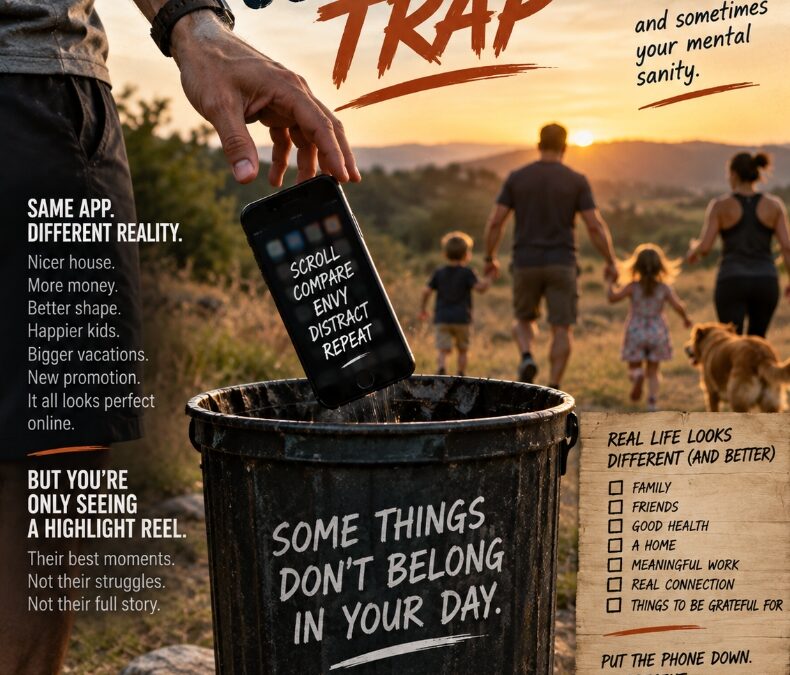
Comparison is the thief of joy…and sometimes your mental sanity.
Comparing ourselves to other people isn’t new. We’ve been doing it forever. What has changed is the access we have to everyone else’s life. We used to compare ourselves to our neighbor, coworker or friend. Now we can open our phone and compare ourselves to thousands of people before we’ve even finished our morning coffee.
And there is actually research behind why this can mess with us.
A recent meta-analysis looked at 54 independent samples involving more than 36,000 people and found that upward comparison on social media—looking at people we perceive as doing better than us—was associated with more anxiety, depression and negative emotions, along with lower well-being and self-esteem. That doesn’t prove social media causes all of those problems, but the relationship is strong enough that it’s worth paying attention to.
Think about how easily it happens.
Someone has a nicer house. Someone makes more money. Someone is in better shape. Someone’s kids seem perfect. Someone got promoted. Someone is on vacation while you’re sitting in the break room eating leftovers out of a plastic container.
Nothing about your life changed in those 15 minutes.
But somehow you feel worse about it.
Researchers have actually seen this happen on a day-to-day level. In one 14-day study, greater social media use was associated with stronger feelings that other people were happier, better looking, more popular or simply had better lives. Those upward comparisons were then associated with lower self-worth and worse overall well-being.
That’s the trap.
We’re comparing our entire life to a small piece of someone else’s.
You see the vacation. You don’t know what their bank account looks like.
You see the promotion. You don’t know what their work-life balance looks like.
You see the perfect family picture. You don’t know what happened five minutes before the picture.
You see the transformation photo. You don’t see the months or years of work that went into it.
And here’s something else we need to remember: sometimes there isn’t some hidden negative side.
Maybe they’re genuinely crushing it.
Good for them.
Someone else’s success doesn’t take anything away from yours. Comparison can actually be motivating when we look at someone and think, If they can do it, maybe I can too. Research suggests comparison isn’t universally harmful; how we interpret that comparison matters. When it creates inspiration rather than envy or feelings of inferiority, the psychological effect can be very different.
So maybe the answer isn’t to stop comparing ourselves completely. That’s probably unrealistic.
The answer is becoming aware of what comparison is doing to us.
If you close Instagram or Facebook and suddenly feel worse about your body, career, marriage, finances or life than you did 30 minutes ago, recognize what’s happening.
Put the phone down.
Look around at your actual life.