Well, we survived Thanksgiving. The leftovers are in the refrigerator, the Christmas decorations are coming out, and apparently the sun has decided that 5:00 PM is an appropriate bedtime.
Welcome to the holiday season!
For some people, this is the best time of the year. For others, it’s one of the most mentally and emotionally challenging.
And for a lot of us, it’s a little bit of both.
Between work, family obligations, Christmas shopping, financial stress, colder weather, and trying to figure out how we’re going to fit another six responsibilities into a day that already doesn’t have enough hours, December can get overwhelming pretty quickly.
Add in the fact that many of us are driving to work in the dark and driving home in the dark, and it’s not surprising that we start feeling a little different this time of year.
Is It Holiday Stress or Seasonal Depression?
There’s actually a difference.
Seasonal Affective Disorder, appropriately abbreviated SAD, is a form of depression that follows a seasonal pattern. It commonly occurs during the fall and winter months when we have less exposure to natural daylight.
Reduced daylight can affect our internal biological clock and the systems that regulate our mood, energy, and sleep.
Holiday stress, on the other hand, is often associated with financial pressure, family dynamics, grief, loneliness, and increased responsibilities.
Unfortunately, there’s nothing stopping you from experiencing both at the same time.
A few things to pay attention to:
- Feeling tired despite getting enough sleep.
- Losing interest in things you normally enjoy.
- Increased irritability or a shorter temper.
- Changes in appetite or increased carbohydrate cravings.
- Difficulty concentrating or finding motivation.
- Avoiding social interaction.
- Persistent feelings of sadness or hopelessness.
Having a couple of these symptoms doesn’t automatically mean you have seasonal depression. But if you’re consistently feeling different from your normal self, it’s worth paying attention to.
Working in Senior Living During the Holidays
I think our industry presents some unique challenges this time of year.
We’re responsible for helping our residents enjoy the holidays, creating meaningful experiences, decorating communities, organizing activities, and making sure people feel connected.
Meanwhile, we’re trying to manage all of those same things in our own lives.
Some of us will work Christmas. Some will be away from family. Some will be celebrating their first Christmas without someone they love.
And some will spend their entire shift making other people smile while struggling to find a reason to smile themselves.
I think that’s something we need to be more aware of, both in ourselves and in the people we work with.
What Can We Actually Do About It?
1. Get some daylight.
Yes, it’s cold outside. I’m not particularly excited about that either.
But getting outside during daylight hours, even for a short walk during your lunch break, can help support your natural sleep-wake cycle and overall well-being.
2. Keep moving.
This doesn’t mean you need to start training for a marathon in December. Regular physical activity can support your mood, sleep, and energy levels. Find something you enjoy and make time for it.
3. Protect your sleep.
We tend to sacrifice sleep when life gets busy and then wonder why we’re exhausted, irritable, and craving everything in the break room.
Try to maintain a consistent sleep schedule, limit caffeine later in the day, and give yourself some time to unwind.
4. Stop trying to make Christmas perfect.
Christmas is not an emergency.
You don’t need to attend every gathering, buy everyone a gift, have the best-decorated house on the street, or spend money you don’t have.
The people who care about you would probably rather have you happy and present than financially stressed and emotionally exhausted.
5. Don’t isolate yourself.
When we’re struggling, sometimes the last thing we want to do is be around other people. Unfortunately, withdrawing can make things worse.
Call a friend. Have lunch with a coworker. Spend time with someone you enjoy being around. And if you’re struggling, have an actual conversation about it.
6. Get professional help when you need it.
If your symptoms are persistent, worsening, or interfering with your daily life, speak with a healthcare professional. Seasonal depression is treatable, and options can include counseling, light therapy, and medication.
Exercise, nutrition, and better sleep are important, but they’re not always the entire solution.
Remember, We Have an EAP for a Reason
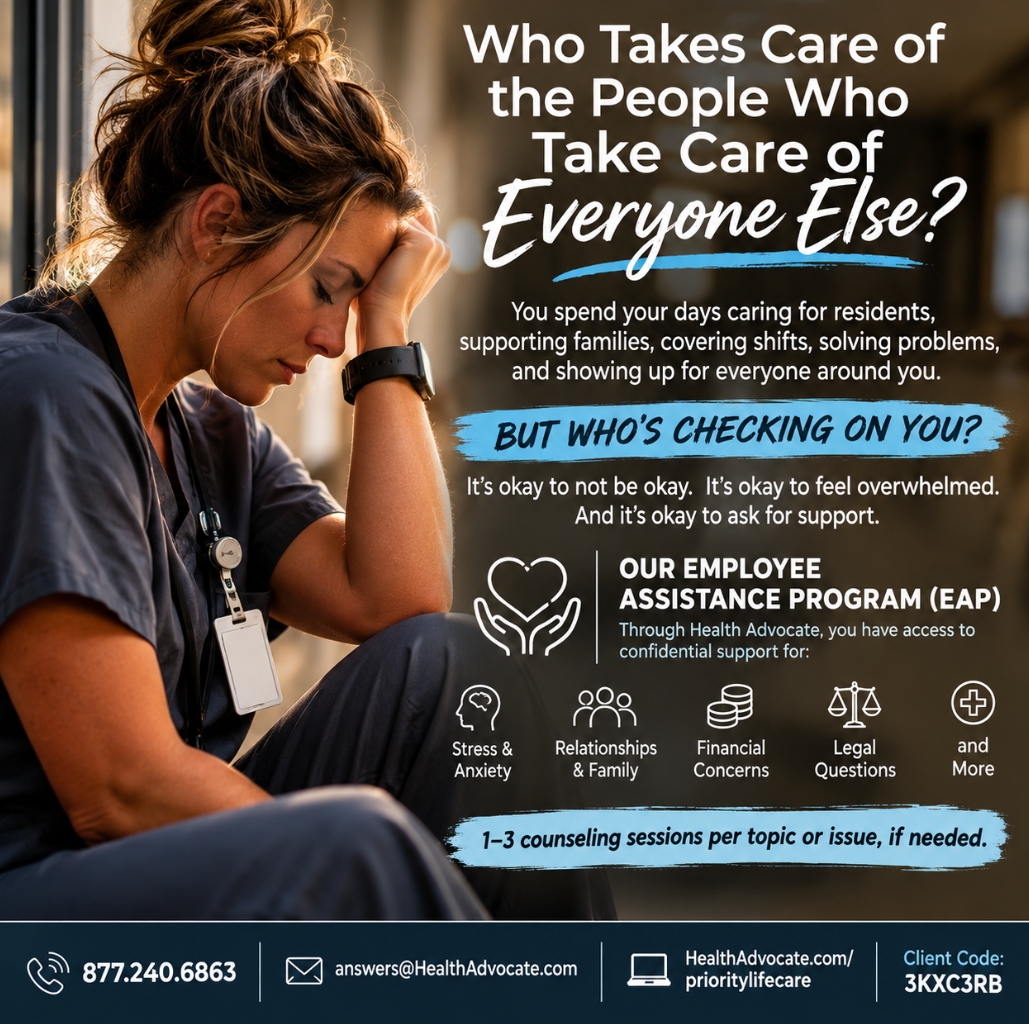
One of the resources I wish more of our Priority Life Care employees would take advantage of is our Employee Assistance Program through Health Advocate.
You don’t have to be in a crisis to use it.
Maybe you’re dealing with stress at home, financial concerns, grief, relationship difficulties, or simply need to talk to someone outside of your normal circle.
That’s what this resource is there for.
Priority Life Care Employee Assistance Program (EAP)
- Provider: Health Advocate
- Phone: 877-240-6863
- Website: https://HealthAdvocate.com/prioritylifecare
- Client Code: 3KXC3RB
- Email: [email protected]
Reach out directly to Health Advocate for confidential support and information about your available benefits.
Additional Mental Health Resources
- 988 Suicide & Crisis Lifeline: Call or text 988, or visit https://988lifeline.org for 24/7 crisis and emotional support.
- National Institute of Mental Health: Learn more about seasonal depression, symptoms, and treatment at https://www.nimh.nih.gov/health/publications/seasonal-affective-disorder
- SAMHSA: Find mental health professionals and treatment resources at https://findtreatment.gov
If you or someone else is in immediate danger, call 911.
My Take
I love the holidays. I love what they represent, the time with family, the traditions, and watching my kids get excited about things that, as adults, we sometimes forget to appreciate.
But I also recognize that the holidays can bring out some difficult emotions.
I don’t think we need to pretend otherwise.
You can love Christmas and still struggle this time of year. You can be surrounded by people and still feel lonely. You can be grateful for everything you have and still need help.
As we head into December, I want you to enjoy the holidays without creating unnecessary expectations for yourself.
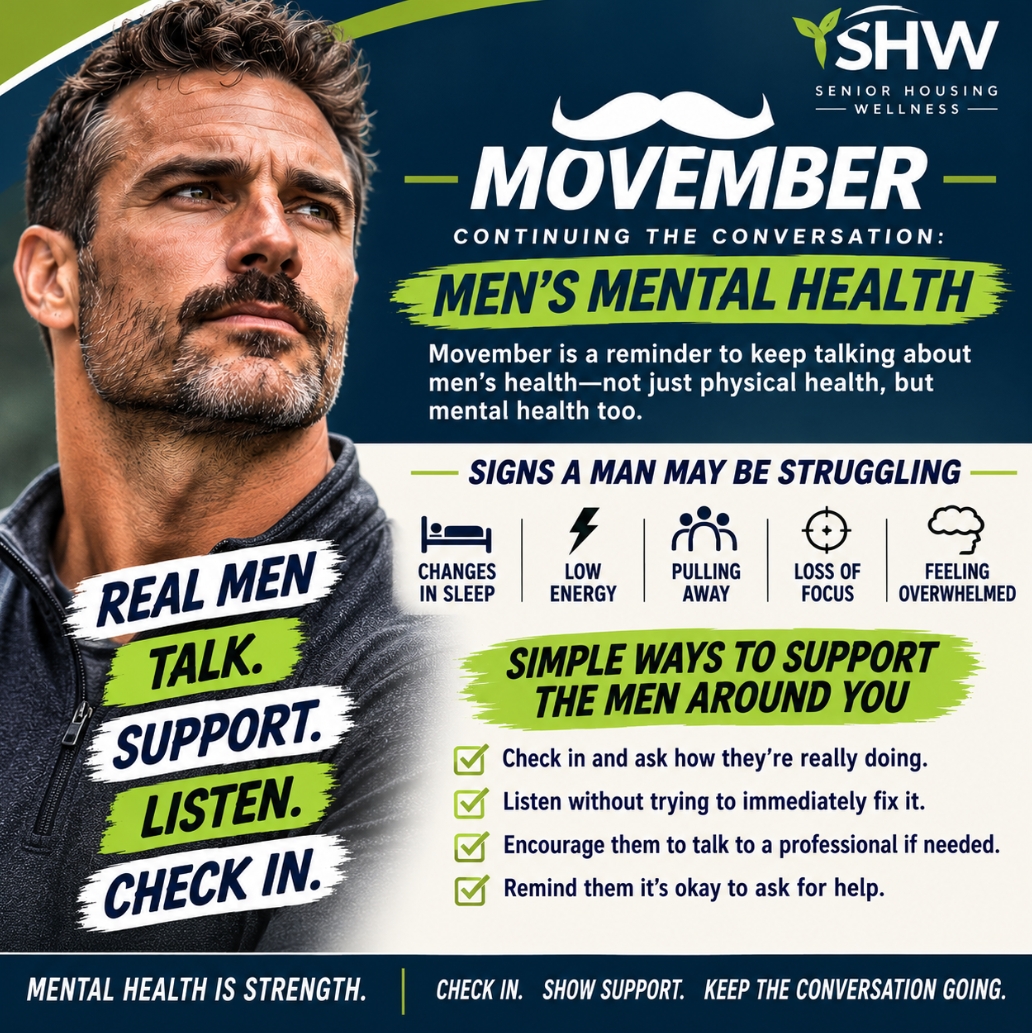
Take care of your physical health. Pay attention to your mental health. Check on your coworkers, especially the ones who are always telling everyone else they’re fine.
And give yourself some of the same patience, compassion, and understanding you give our residents every single day.
You deserve it, too.
Christmas is supposed to be a season of joy, not a 30-day endurance event. Enjoy it, take care of yourself, and remember that asking for help is always an option.