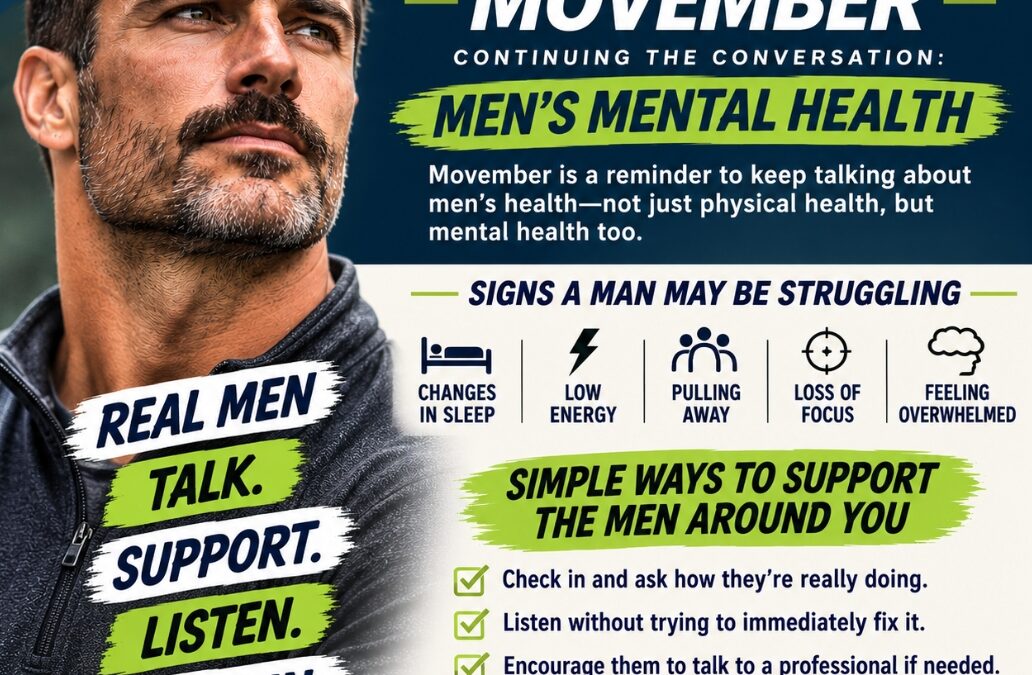
As we continue through Movember, I want to talk about something I think a lot of men struggle with, myself included.
Why is it so easy for us to help everyone else, but so difficult to admit when we need help ourselves?
I think a lot of it comes down to how we measure our value.
We want to provide for our families. We want to be dependable at work. We want to be good husbands, fathers, friends, and leaders. We want people to know they can count on us.
And there’s nothing wrong with any of that.
But somewhere along the way, we can start believing that being dependable means never having a bad day. Never showing frustration. Never admitting we’re overwhelmed.
I’m a fixer by nature. When something isn’t working, I want to figure out why and make it better. And when I’m struggling with something personally, my first instinct is usually to handle it myself.
I know I’m not the only one.
In senior living, I see this mentality everywhere.
The maintenance director who’s always solving someone else’s problem. The caregiver who picks up another shift even though he’s exhausted. The executive director who feels responsible for everything happening in the building. The husband or father who walks through the door after a difficult day and tries to make sure nobody at home knows how much he’s carrying.
And sometimes, the men who appear to have everything under control are the ones who are struggling the most.
Because being good at hiding stress doesn’t mean you’re good at handling it.
I think we need to recognize that mental health doesn’t always look like someone who’s visibly sad or asking for help.
Sometimes it’s a shorter temper. Less patience with your family. Losing interest in things you used to enjoy. Feeling disconnected from people. Or being so mentally exhausted that even the smallest problem feels like one more thing you can’t handle.
And instead of talking about it, we work more. We stay busy. We convince ourselves it’ll eventually get better.
But sometimes it doesn’t.
Here’s what I want men to understand.
You can be strong and still struggle. You can be successful and still feel overwhelmed. You can have a good life and still have difficult days.
Those things don’t cancel each other out.
I don’t believe we need to lower our expectations of ourselves or stop taking responsibility for our lives.
But I do believe we need to stop treating asking for help as some kind of personal failure.
And for everyone reading this, I have a challenge.
Think about the men in your life. Your husband, father, brother, friend, or coworker.
When was the last time you asked how they were doing and actually gave them the opportunity to answer?
Not just the quick “How’s it going?” as you walk past them.
A real conversation.
And if you’re the guy who’s always saying “I’m good,” maybe it’s time to be a little more honest with someone you trust.
You don’t need to have all the answers. You don’t need to solve every problem before you talk about it.
Sometimes you just need someone to listen.
As we continue recognizing men’s mental health this Movember, I hope we remember something.
The people, man or woman, who spend their lives being strong for everyone else deserve to have someone be there for them, too.
And if you’re that person, don’t wait until everything becomes too much before you let someone in.
There’s a difference between being strong and believing you have to do everything alone.