Practical Strategies for Thriving at Work and Home
Stress is a part of life.
Whether you’re caring for residents, managing a team, balancing family responsibilities, or navigating unexpected challenges, everyone experiences moments when emotions run high.
The goal isn’t to eliminate stress or never feel angry.
The goal is learning how to respond in a way that protects your health, your relationships, and your ability to perform at your best.
Understanding Stress
Stress is your body’s natural response to a challenge.
In small doses, stress can help you stay focused and motivated. But when stress becomes constant, it begins affecting nearly every part of your life.
Chronic stress may lead to:
- Difficulty concentrating
- Fatigue
- Poor sleep
- Increased anxiety
- Irritability
- Muscle tension
- Headaches
- Elevated blood pressure
- Emotional exhaustion
- Burnout
Recognizing stress early gives you the opportunity to manage it before it begins managing you.
Understanding Anger
Anger is a normal human emotion.
It often appears when we feel:
- Disrespected
- Overwhelmed
- Frustrated
- Hurt
- Afraid
- Out of control
Anger itself isn’t the problem.
The decisions we make while angry often create the biggest consequences.
Learning to regulate emotions allows us to communicate more effectively and maintain stronger relationships.
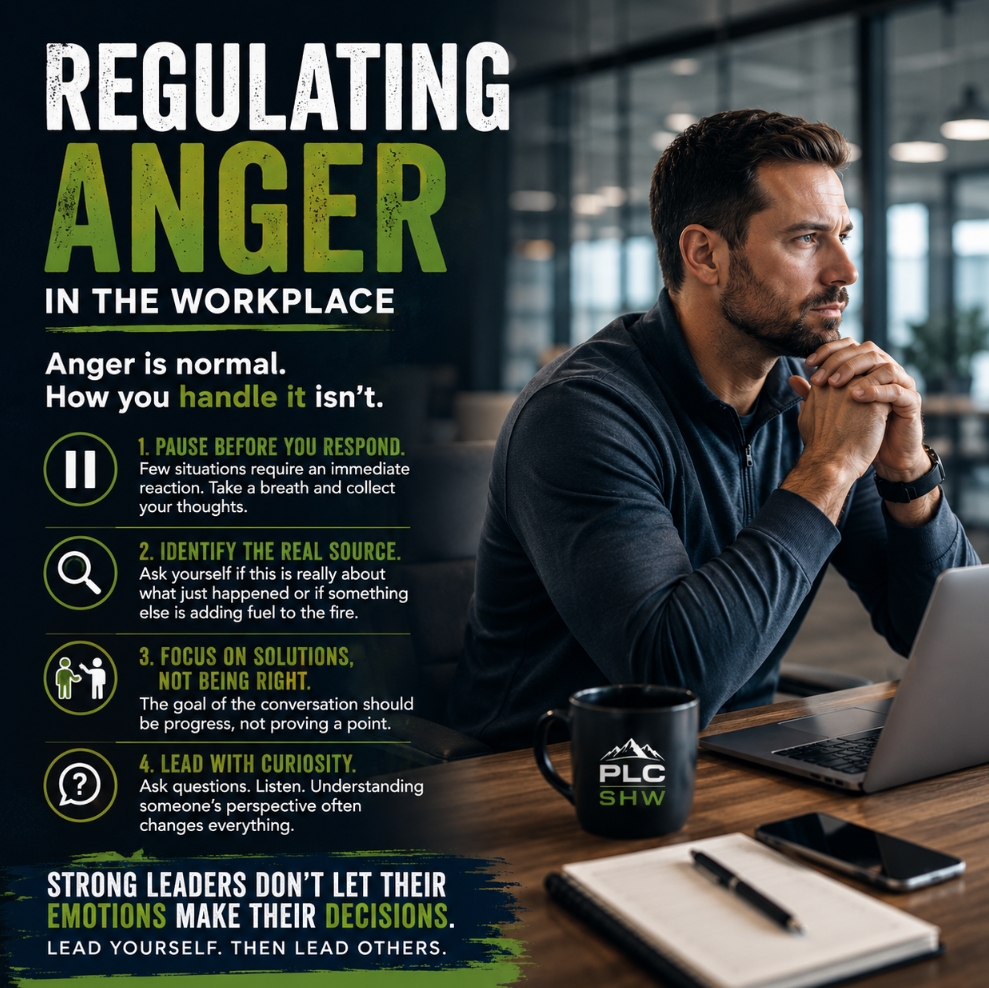
The Four-Step Pause Method
Before reacting to a stressful situation:
1. Pause
Very few situations require an immediate emotional response.
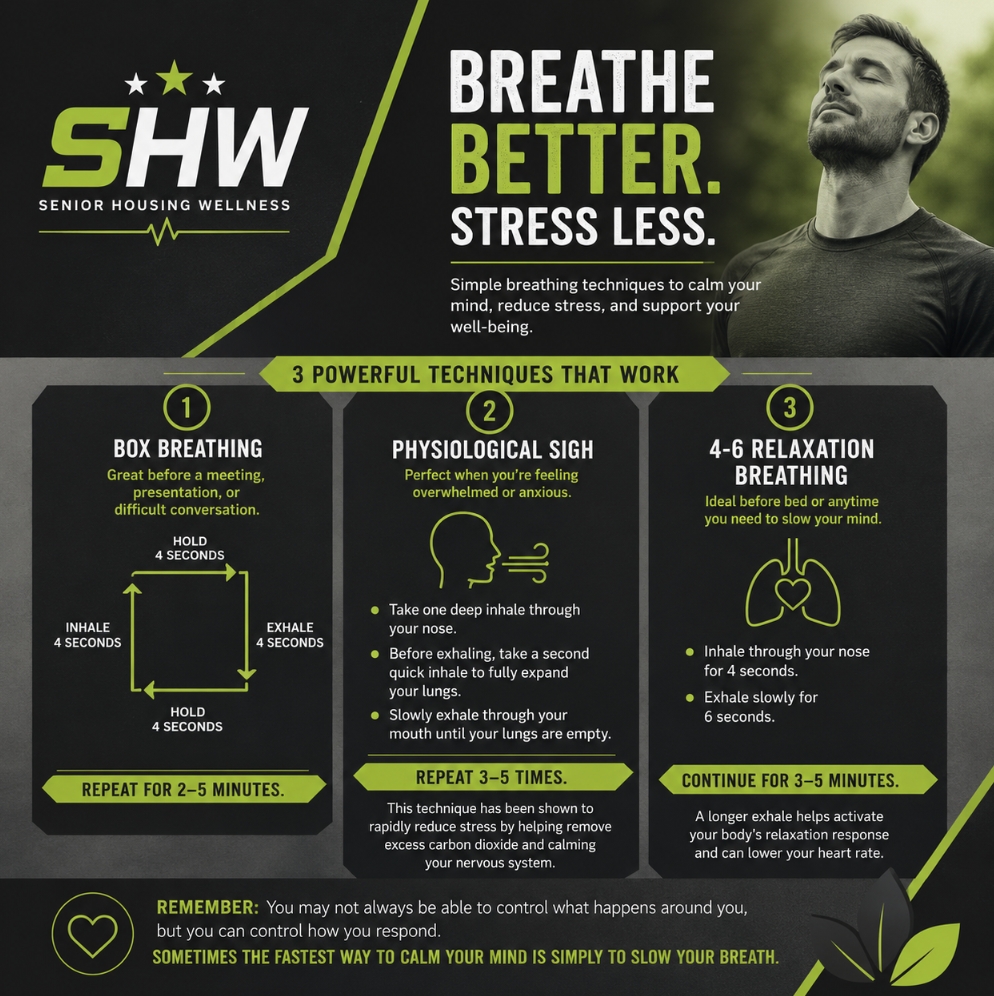
Take several slow breaths.
Give yourself permission to slow down.
2. Identify the Real Source
Ask yourself:
- What am I actually upset about?
- Is this situation the problem—or is it something else that has built up today?
Sometimes work isn’t the true source of frustration.
3. Choose Your Response
Ask:
“What response will improve this situation?”
Instead of reacting emotionally:
- Ask questions.
- Seek clarification.
- Stay curious.
- Focus on solving the problem.
4. Reflect Afterwards
Once emotions settle, ask:
- What triggered me?
- How did I respond?
- What would I do differently next time?
Growth happens through reflection.
Daily Stress Refreshes
Small habits practiced consistently can dramatically improve resilience.
Move Your Body
A 10–20 minute walk can reduce stress hormones, improve mood, and increase mental clarity.
Movement truly is medicine.
Control What You Can
Instead of focusing on everything happening around you, identify one action you can take today.
Progress reduces overwhelm.
Fuel Your Body
Nutrition directly affects mood and energy.
Aim to:
- Eat protein with each meal
- Stay hydrated
- Limit excess sugar during stressful periods
- Avoid relying solely on caffeine
Stable energy supports emotional stability.
Protect Your Sleep
Sleep is one of the most powerful stress-management tools available.
Try to:
- Keep a consistent bedtime
- Limit screens before bed
- Reduce caffeine later in the day
- Create a relaxing nighttime routine
Recovery starts with rest.
Practice Gratitude
When stress narrows your focus, gratitude broadens it.
Each day, identify three things you’re thankful for.
This simple practice can improve resilience and shift perspective.
Recognizing Burnout
Burnout doesn’t happen overnight
Warning signs include:
- Constant exhaustion
- Feeling emotionally detached
- Loss of motivation
- Increased negativity
- Difficulty concentrating
- Feeling like nothing you do makes a difference
If these symptoms continue for weeks, it may be time to seek additional support.
Building Emotional Resilience
Resilient people aren’t free from stress.
They’ve developed healthy ways to recover from it.
Build resilience by:
- Staying physically active
- Maintaining supportive relationships
- Asking for help when needed
- Setting healthy boundaries
- Practicing forgiveness
- Taking regular breaks throughout the day
- Celebrating small wins
Communication During Difficult Moments
When emotions rise:
Instead of:
“You never…”
Try:
“I’ve noticed…”
Instead of:
“This is your fault.”
Try:
“Help me understand.”
Instead of:
Reacting immediately…
Take time to respond intentionally.
Healthy communication strengthens trust.
When You Need Additional Support
Everyone needs help sometimes.
Speaking with:
- A trusted coworker
- Your supervisor
- Human Resources
- Your healthcare provider
- A licensed mental health professional
is a sign of strength—not weakness.
Seeking support early often prevents bigger challenges later.
Wellness isn’t simply about nutrition or exercise.
It’s about increasing your capacity to lead, care for others, solve problems, and enjoy life.
Stress will always exist.
Difficult days will happen.
But each day presents an opportunity to choose a healthier response.
Small choices practiced consistently create lasting resilience.
Take a breath.
Pause before reacting.
Care for yourself so you can continue caring for others.