We can have groceries delivered in an hour, dinner at our front door in 20 minutes, coffee waiting before we even walk into the store, and almost anything we want shipped overnight.
There’s nothing inherently wrong with any of that.
In fact, sometimes convenience is exactly what we need.
The problem isn’t convenience.
The problem is when convenience becomes our default.
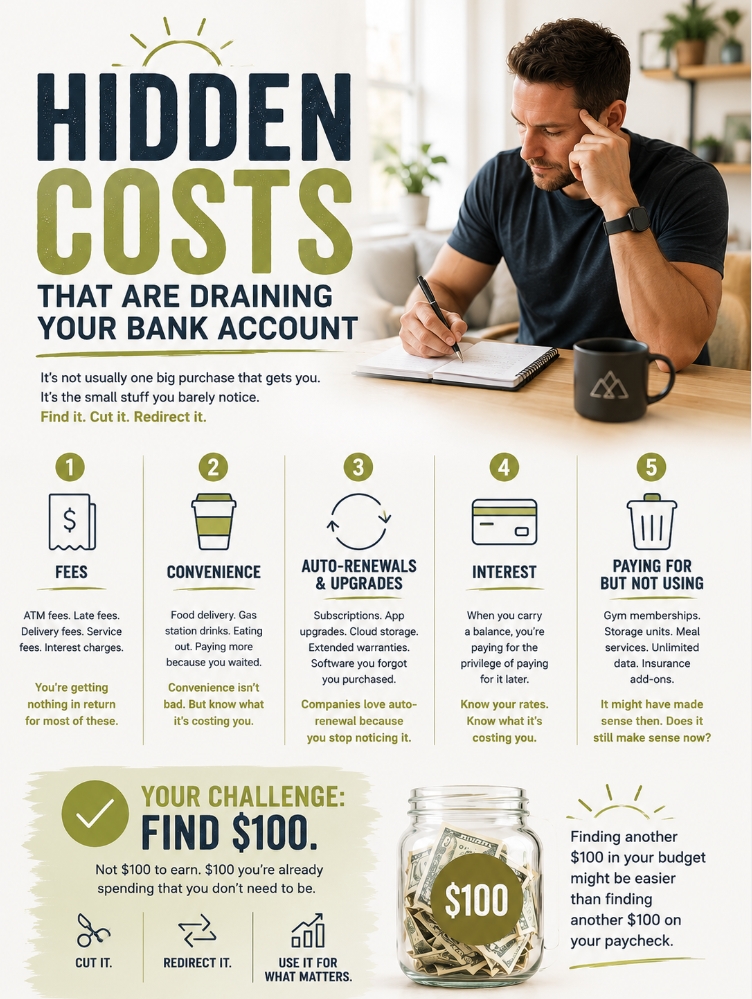
Most of us never make one huge financial mistake. Instead, we make dozens of tiny decisions every week that slowly chip away at our financial goals.
We’ve all done it.
- Grab breakfast because we overslept.
- Buy coffee because we didn’t make any at home.
- Order delivery because we’re too tired to cook.
- Add something to our Amazon cart because it “might be useful.”
- Subscribe to another streaming service because it’s only a few dollars a month.
None of those purchases seem significant on their own.
But over time, they tell a different story.
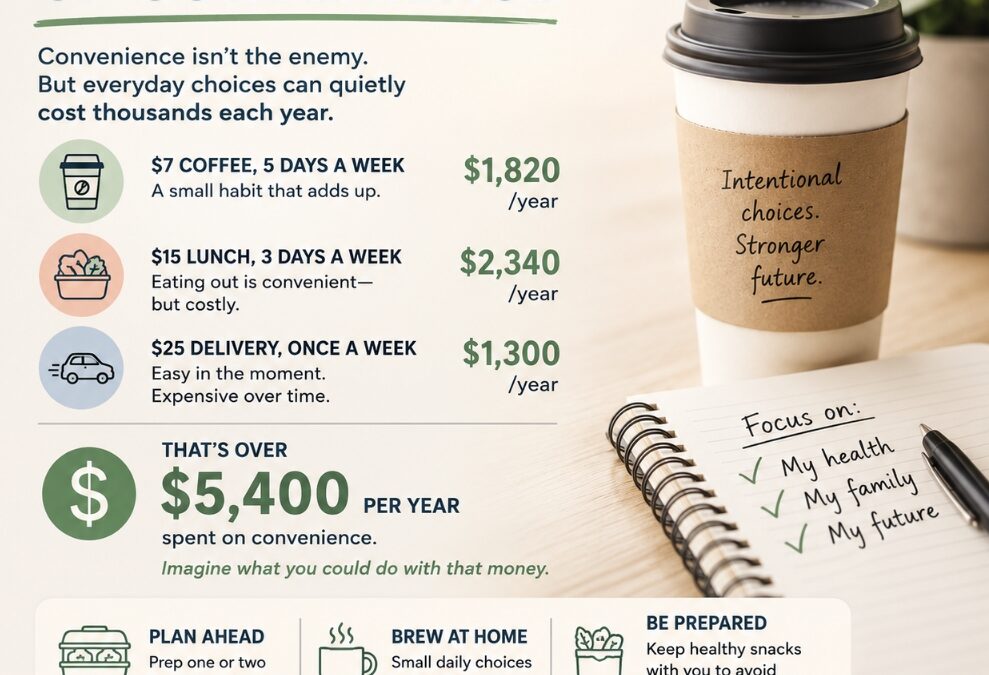
Let’s look at the numbers.
- $7 coffee, 5 days per week = $1,820 per year
- $15 lunch, 3 days per week = $2,340 per year
- $25 food delivery, once per week = $1,300 per year
That’s more than $5,400 every year spent on convenience.
And that’s before monthly subscriptions, impulse shopping, gas station snacks, or those “treat yourself” purchases that seem harmless in the moment.
Now think about what that same $5,400 could do instead.
It could build an emergency fund.
Pay down debt.
Fund a family vacation.
Be invested for retirement.
Help cover your child’s sports or college expenses.
The real cost of convenience isn’t always the money you spend today.
It’s the opportunities you give up tomorrow.
This doesn’t mean you should never buy coffee or order takeout.
Financial wellness isn’t about deprivation.
It’s about intentionality.
If you’re choosing convenience because it genuinely improves your life, that’s money well spent.
If you’re choosing it simply because you didn’t plan ahead, that’s where small changes can make a big difference.
Here are a few simple ways to keep convenience from controlling your budget:
- Meal prep just one or two lunches each week.
- Brew your coffee at home most mornings.
- Keep healthy snacks in your desk, car, or gym bag to avoid expensive impulse purchases.
- Review your subscriptions every few months and cancel the ones you rarely use.
- Before making an impulse purchase, ask yourself: “Will this still matter to me in a week?”
Financial freedom rarely comes from one giant decision.
It comes from hundreds of small, intentional choices repeated over time.
The goal isn’t to eliminate convenience.
The goal is to make sure your spending reflects your priorities—not just your habits.