This is the time of year when I’m constantly meeting with new nutrition clients and working through their initial consultations. One of the biggest questions I get is, “Should I just wait and start after the holidays?”
My answer is always NO.
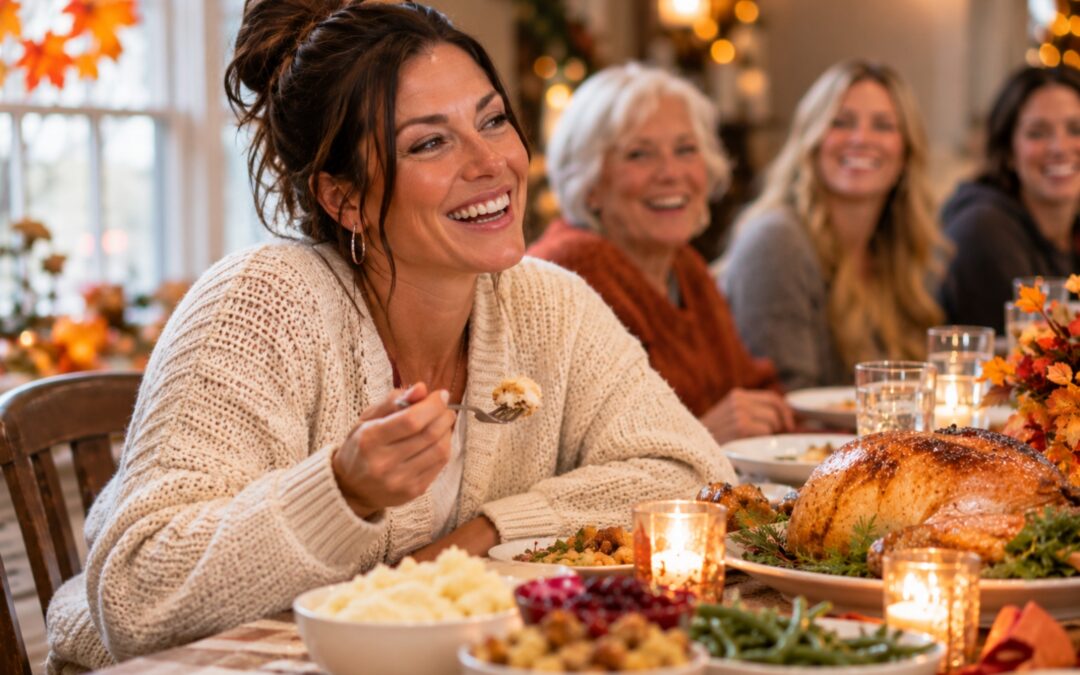
The holidays are a special time of year. They bring people together and give us an opportunity to slow down, spend time with family, and appreciate the good things in life.
They shouldn’t be spent stressing over what’s on your plate, eating out of Tupperware, or avoiding the wonderful foods your family makes once a year.
So, here are five tips to help you stay on track this holiday season without feeling like you’ve been placed in FOOD PRISON.
1. Have a Plan
Going into a holiday meal without any thought as to how you’re going to manage it is like being dropped in the forest with the Predator. Eventually, something is going to go wrong, and it’s probably going to be drastic.
Usually, it ends with you sprawled out on the couch, unable to move, wondering why breathing has suddenly become a cardiovascular event.
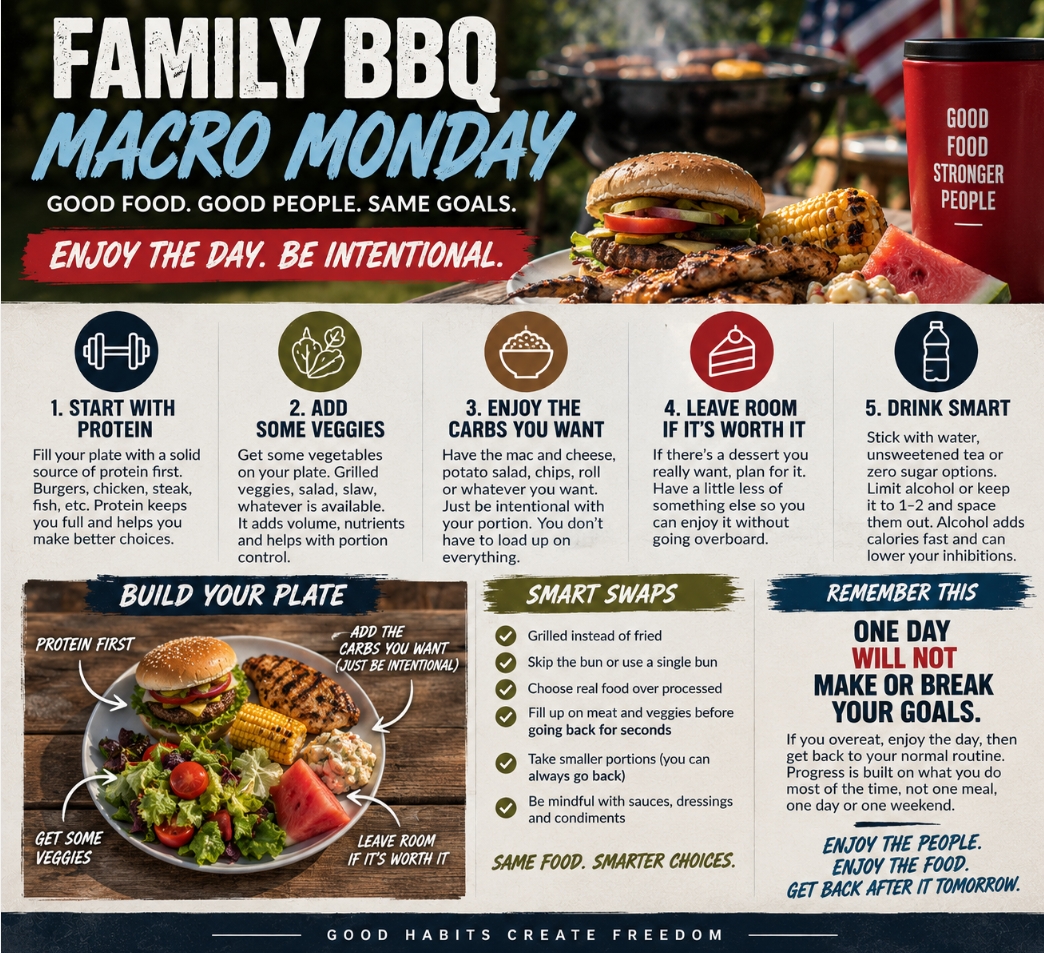
Go into the day with a plan. Know what foods you want to enjoy, be mindful of your portions, and recognize when you’ve had enough.
You don’t need to track every calorie, but a little thought beforehand goes a long way.
2. Eat Normally Throughout the Day
One of the biggest mistakes people make is depriving themselves of food throughout the day because they know they’re having a big meal later.
If you go into Christmas dinner starving, there’s a pretty good chance you’re going to leave the table overly stuffed and wondering what just happened.
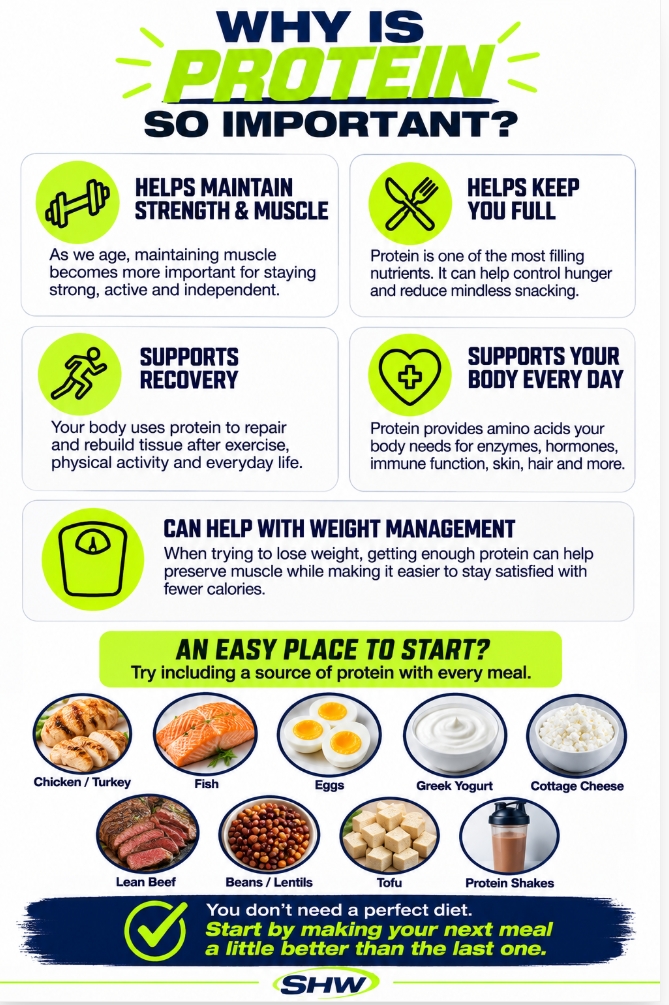
Eat your normal meals, prioritize protein, and stay hydrated. If you’re naturally less hungry for a snack, that’s fine, but don’t intentionally starve yourself to make room for dinner.
3. Practice Portion Control
Think about what your holiday plate has looked like over the years. Now, try starting with half to three-quarters of what you would normally put on it.
The beauty of smaller portions is that you can always go back for seconds.
It gives you an opportunity to slow down, enjoy your food, and determine whether you’re actually still hungry or simply eating because the food is in front of you.
It’s a holiday meal, not an eating competition. Nobody is handing out trophies.
4. DESSERT!
If you’re anything like me, you’re a fan of the desserts your family makes during the holidays.
My family makes pumpkin pie, pecan pie, and Mississippi mud pie. Of course I want to taste all three!
And there’s absolutely nothing wrong with that.
Have a few smaller portions, enjoy them, and know when to stop. You don’t need to deprive yourself, but you also don’t need to eat enough pie to carry you through the first quarter of next year.
Enjoy the food, but remember that the holidays are about much more than what’s on the table.
5. Know Thyself
This is an important one.
If you know that certain foods make it difficult for you to stop eating once you’ve started, be honest with yourself about that.
There’s a difference between enjoying a slice of pie and standing in front of the refrigerator with a fork, convincing yourself that you’re just evening out the edges.
Know your tendencies and set some reasonable boundaries. Maybe that means serving yourself a portion and putting the rest away.
Self-discipline is a lot like a muscle. It takes practice to develop, but you can also make things easier on yourself by managing your environment.
One Meal Doesn’t Ruin Your Goals
These are just a few of the strategies I use with my clients to help them navigate the holidays.
Remember, nobody is perfect. If you eat more than you intended, acknowledge it and move on.
You don’t need to punish yourself with exercise, skip meals the next day, or wait until January 1st to get back on track.
One meal isn’t going to ruin your goals. Allowing one meal to turn into weeks of abandoning your habits is where the problem begins.
I’ve spent over 20 years working in nutrition, and one of the most valuable things I’ve learned is that people who are successful long-term aren’t necessarily the most restrictive. They’re the ones who learn how to navigate real life without abandoning their goals every time their routine changes.
The holidays are part of real life.
Enjoy the food. Enjoy your family. Make some memories. And get back to your normal routine the next day.