Protein is often associated with building muscle, but that’s only part of the story. Research consistently shows that adequate protein intake supports nearly every system in the body—and most Americans, especially older adults, don’t consume enough at the right times throughout the day.
💪 Protein Helps Preserve Muscle as You Age
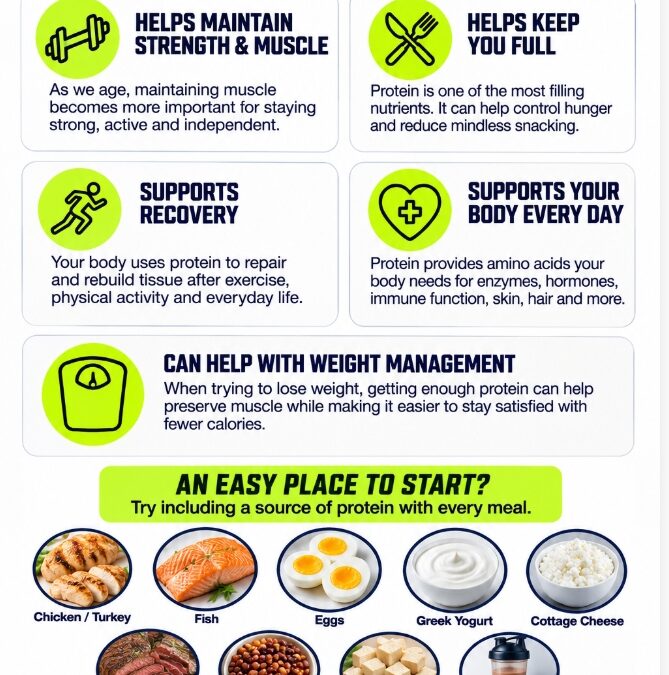
Starting around age 30, adults lose approximately 3–8% of their muscle mass per decade, and that rate accelerates after age 60.
This age-related muscle loss (sarcopenia) is associated with:
- Increased risk of falls
- Reduced mobility
- Loss of independence
- Slower metabolism
Research shows that resistance training combined with adequate protein intake is the most effective strategy to slow this process.
🍳 Protein Keeps You Fuller Longer
Protein has the highest satiety value of all three macronutrients.
Studies have found that increasing protein intake can:
- Reduce hunger hormones
- Increase fullness hormones
- Naturally decrease daily calorie intake by 200–400 calories in many individuals without intentionally dieting.
Feeling full longer often means fewer afternoon cravings and less mindless snacking.
🔥 Protein Supports Weight Loss
When losing weight, your body doesn’t just lose fat—it can also lose muscle.
Higher-protein diets have been shown to:
- Preserve more lean muscle during weight loss
- Increase the calories your body burns digesting food (the thermic effect of food)
- Improve long-term weight maintenance
Maintaining muscle helps keep metabolism higher during a calorie deficit.
🛠️ Your Body Uses Protein Every Day
Protein isn’t just for muscles.
Your body uses amino acids to produce:
- Enzymes
- Hormones
- Immune cells
- Skin
- Hair
- Nails
- Connective tissue
Every cell in your body depends on protein to function properly.
📊 How Much Protein Do You Need?
The Recommended Dietary Allowance (RDA) is 0.8 grams per kilogram of body weight, but that’s simply the amount needed to prevent deficiency—not optimize health.
Research suggests:
- General Health: 0.7–0.8 g per pound of goal body weight
- Weight Loss: 0.8–1.0 g per pound of goal body weight
- Strength Training: 0.8–1.0 g per pound
- Older Adults (60+): 1.2–1.6 g/kg daily to help preserve muscle and function
🍗 Easy Ways to Increase Protein
Aim for 25–40 grams of protein at each meal.
Great options include:
- Chicken or turkey
- Fish
- Eggs
- Greek yogurt
- Cottage cheese
- Lean beef
- Tofu or tempeh
- Beans and lentils
- Protein shakes
Takeaway
You don’t need to overhaul your entire diet overnight.
Simply adding one quality protein source to each meal can improve fullness, support muscle, aid recovery, and help you maintain a healthier body composition for years to come.