When temperatures climb, most people think they’re doing the right thing by drinking more water.
But here’s what many people don’t realize:
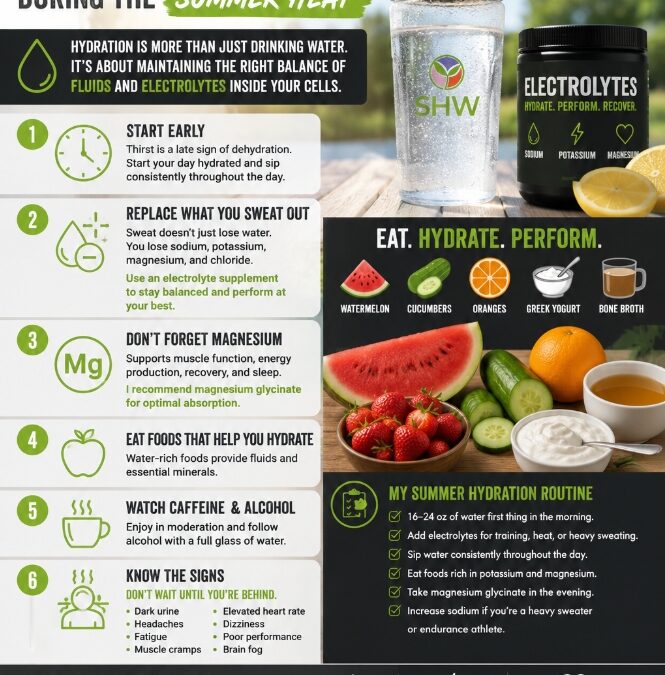
Hydration isn’t just about water—it’s about maintaining the right balance of fluids and electrolytes inside your cells.
If you’ve ever experienced headaches, muscle cramps, fatigue, brain fog, dizziness, or a drop in performance during the summer, there’s a good chance you weren’t just dehydrated—you were under-electrolyted.
1. Start Hydrating Before You’re Thirsty
Thirst is actually a late indicator that your body is already playing catch-up.
Instead of trying to chug a gallon of water in the afternoon, spread your intake throughout the day.
A simple goal is:
- Drink water first thing in the morning.
- Continue sipping consistently throughout the day.
- Increase fluids before prolonged outdoor activity or exercise.
2. Replace What You Sweat Out
Sweat isn’t just water.
Every time you sweat, you’re losing:
- Sodium
- Potassium
- Magnesium
- Chloride
If you’re only replacing those losses with plain water, you can actually dilute your electrolyte levels, leaving you feeling sluggish despite drinking “enough.”
If you’re working outside, exercising, coaching, mowing the lawn, or spending hours at the ball field, adding an electrolyte supplement can make a noticeable difference.
Look for products that provide meaningful amounts of sodium without excessive sugar or artificial ingredients.
3. Don’t Forget Magnesium
Magnesium is one of the most overlooked minerals I see.
It’s involved in hundreds of biochemical reactions including:
- Muscle contraction
- Muscle relaxation
- Nerve function
- Energy production
- Sleep quality
- Recovery
During periods of heavy sweating, your magnesium needs can increase.
Personally, I prefer magnesium glycinate because it’s well absorbed and tends to be easier on the stomach than many other forms.
Many people also notice improvements in muscle cramping, sleep quality, and recovery when their magnesium intake is adequate.
4. Eat Foods That Help You Hydrate
Hydration isn’t just what you drink—it’s also what you eat.
Some of my favorite hydration-supporting foods include:
- Watermelon
- Strawberries
- Oranges
- Cucumbers
- Bell peppers
- Tomatoes
- Greek yogurt
- Bone broth
These foods provide both water and important minerals that support hydration.
5. Watch Your Caffeine and Alcohol Intake
You don’t have to eliminate coffee or enjoy a cold drink less in the summer.
Just recognize that:
- Large amounts of caffeine may increase fluid needs in some people.
- Alcohol can contribute to dehydration.
For every alcoholic beverage, I recommend following it with a full glass of water.
6. Know the Signs You’re Falling Behind
Don’t wait until you’re severely dehydrated.
Watch for:
- Dark urine
- Headaches
- Fatigue
- Muscle cramps
- Elevated heart rate
- Dizziness
- Poor exercise performance
- Difficulty concentrating
These are often your body’s early warning signs that it’s time to replenish both fluids and electrolytes.
My Summer Hydration Routine
This is what I personally recommend for most healthy, active adults:
- Start your morning with 16–24 oz of water.
- Add electrolytes if you’re training, working outdoors, or spending extended time in the heat.
- Continue drinking water consistently throughout the day instead of all at once.
- Eat whole foods rich in potassium and magnesium.
- Supplement with magnesium glycinate in the evening to support recovery and sleep.
- Increase sodium intake appropriately if you’re a heavy sweater or endurance athlete.
The Bottom Line
Hydration isn’t about chasing an arbitrary gallon of water each day.
It’s about giving your body what it actually needs to function.
Water provides the fluid. Electrolytes help your body use it. Magnesium supports the muscles and nervous system that depend on proper hydration.
This summer, don’t just drink more.
Hydrate smarter.