Every workplace experiences moments of frustration.
A project falls behind schedule.
An employee misses an important deadline.
A customer complains.
A coworker says something that feels disrespectful.
A meeting doesn’t go as planned.
If you’ve been in leadership long enough, you’ve experienced every one of these situations—and probably all in the same week.
Here’s the reality:
The problem isn’t that we get angry.
Anger is a normal human emotion.
The problem begins when we allow anger to become the decision-maker.
I’ve seen talented leaders damage years of trust with a single emotional reaction. I’ve also seen organizations create cultures where people are afraid to speak up because they don’t know how their leader will respond.
Leadership isn’t tested when everything is going well.
It’s tested when things aren’t.
Your Response Sets the Tone
As a leader, people aren’t just listening to your words.
They’re watching your reactions.
When a leader loses control:
- Employees become defensive.
- Honest communication decreases.
- Creativity suffers.
- Problems get hidden instead of solved.
- Trust begins to erode.
People stop asking,
“How can we solve this?”
And start asking,
“How do I avoid getting yelled at?”
That shift changes an organization’s culture faster than almost anything else.
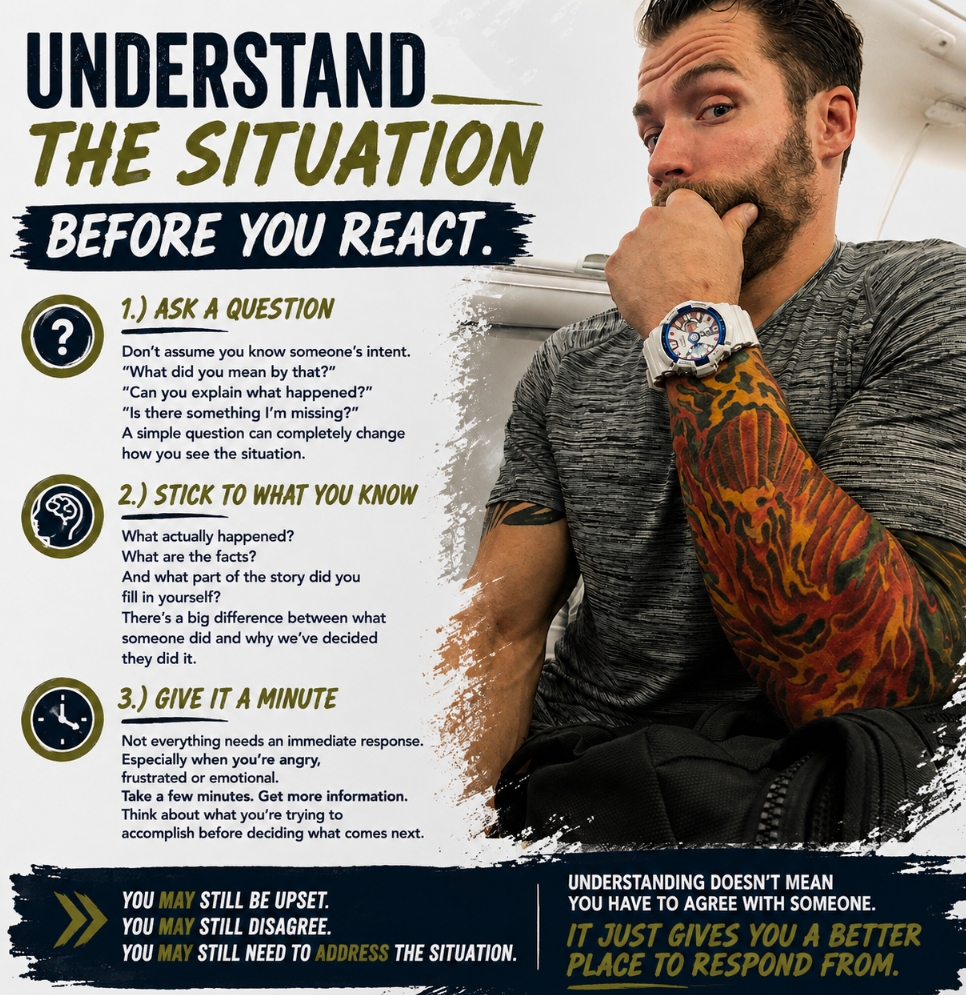
Pause Before You Respond
One of the greatest leadership skills you can develop is learning that not every problem requires an immediate response.
In fact, many don’t.
When emotions are elevated, the logical part of the brain becomes less effective. We become more likely to interrupt, assume intent, exaggerate, or say something we’ll later regret.
Sometimes the best leadership decision is simply to pause.
Take a breath.
Walk around the building.
Get a drink of water.
Sleep on it if you can.
Very few workplace situations require an instant emotional reaction.
A thoughtful response almost always produces a better outcome than an emotional one.
Ask Yourself What’s Really Happening
One lesson I’ve learned is that the event that triggers our anger often isn’t the real problem.
Someone forgetting an email probably isn’t why you’re upset.
It may be:
- You’ve been working 60-hour weeks.
- You’re exhausted.
- You’re worried about your family.
- Budgets are tight.
- You’ve had three difficult conversations already today.
- You’re carrying stress from outside of work.
Those things don’t excuse poor behavior from others.
But they do influence how we interpret situations.
Before reacting, ask yourself:
“Am I responding to this situation, or am I reacting to everything else I’ve been carrying?”
That question alone can prevent a conversation you’ll later wish you had handled differently.
Seek Understanding Before Judgment
One of the quickest ways to create conflict is to assume motives.
We tend to believe we know why someone did—or didn’t do—something.
Most of the time, we don’t.
Instead of saying:
“Why didn’t you do what I asked?”
Try asking:
“Help me understand what happened.”
That small change communicates curiosity instead of accusation.
Sometimes you’ll discover there was poor communication.
Sometimes you’ll uncover obstacles you didn’t know existed.
Sometimes the employee simply made a mistake.
Whatever the answer, you’ll have far more information to solve the problem than you would have if you immediately assumed the worst.
Solve the Problem—Don’t Win the Argument
One of the biggest mistakes leaders make is entering difficult conversations with the goal of being right.
Being right isn’t leadership.
Creating improvement is.
Ask yourself:
- What outcome am I trying to achieve?
- Will my words move us closer to that outcome?
- Am I correcting behavior or simply venting frustration?
The purpose of accountability is growth—not punishment.
If people leave a conversation feeling attacked instead of coached, you’ve probably won the argument but lost the opportunity to develop them.
Emotional Stability Builds Trust
The leaders people trust most aren’t necessarily the loudest or the most charismatic.
They’re the most consistent.
Employees feel psychologically safe when they know:
- Expectations are clear.
- Accountability is fair.
- Feedback is respectful.
- Emotions don’t dictate decisions.
Calm leadership creates confident teams.
Emotional leadership creates anxious ones.
One Principle I Try to Remember
You cannot control how people behave.
You can control how you lead.
That doesn’t mean ignoring poor performance.
It doesn’t mean avoiding difficult conversations.
It means handling those conversations with professionalism, emotional intelligence, and self-control.
Because at the end of the day, leadership isn’t about having power over people.
It’s about having mastery over yourself.