Getting your first real paycheck feels pretty good.
For the first time, you have your own money coming in. You worked the hours, earned the paycheck, and now you get to decide what to do with it.
Maybe you can finally buy some things you’ve wanted. You can go out with friends without asking someone else for money. You can upgrade your phone, order food, buy new clothes, or just enjoy having money in your bank account that you earned.
And you should enjoy some of it.
You worked for it.
But your first job gives you something more valuable than spending money. It’s also where you start developing financial habits that can follow you for the rest of your life.
The amount you’re making right now might change.
Your habits can stick around much longer.
Give Every Dollar a Job
You don’t need a complicated spreadsheet or a 47-category budget to start managing your money.
Keep it simple.
When your paycheck hits your account, decide where the money needs to go before you start spending it.
Some might go toward bills or responsibilities.
Some should go into savings.
Some might need to cover gas, food, or transportation until your next paycheck.
And yes, some can be for fun.
The important part is knowing how much you actually have available to spend.
If you get paid $700 and immediately start treating that entire $700 like spending money, you’re probably going to have a problem when expenses start showing up.
Instead, think of your paycheck in this order:
Responsibilities. Savings. Then spending.
Whatever system you eventually use, start by giving your money some direction instead of wondering where it went after it’s gone.
Start Saving Before Life Gets Expensive
If you’re living at home or working your first job, you might not have many expenses yet.
That’s actually an opportunity.
You may not have rent or a mortgage. You might not be paying for groceries, utilities, insurance, childcare, or all the other expenses that tend to show up later in life.
Start saving now.
It doesn’t have to be hundreds of dollars.
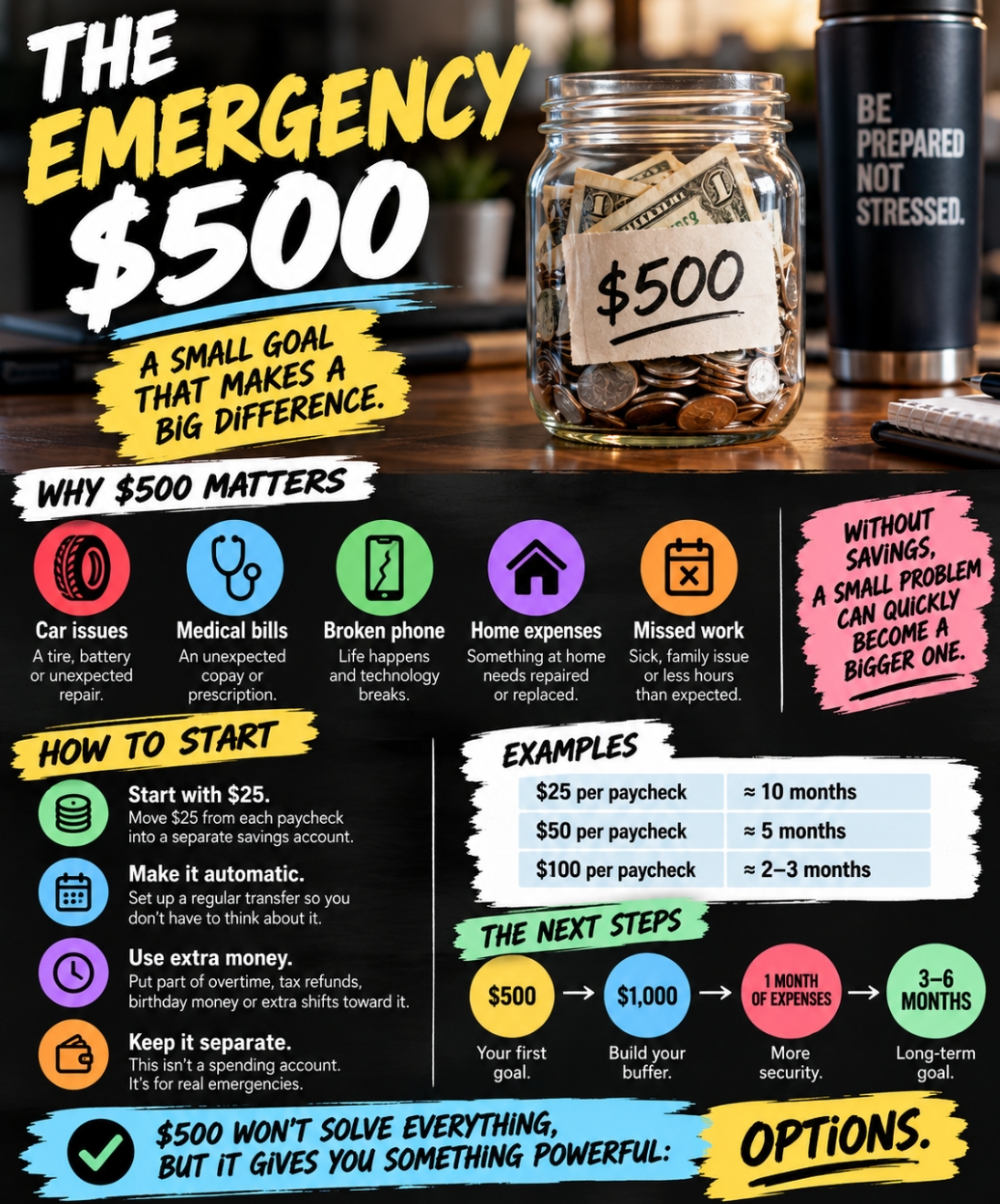
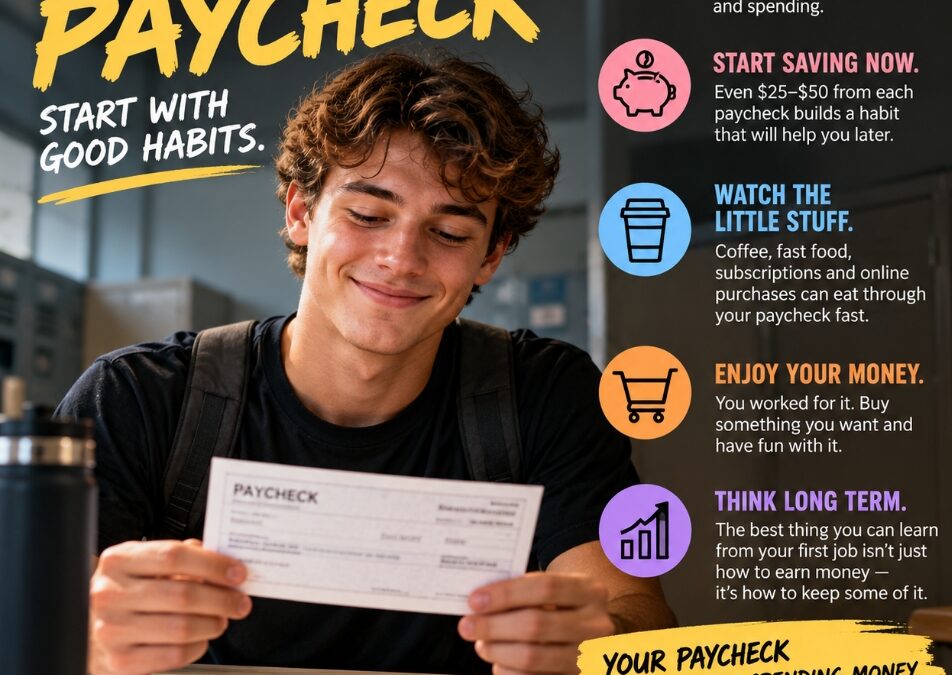
Start with $25 from every paycheck.
Maybe $50.
If you can afford more, great.
The amount matters, but right now the habit might matter even more.
Learn that every time money comes in, some of it stays with you.
If you get used to spending 100% of everything you make, earning more money later doesn’t automatically fix the problem.
You can make $500 and spend $500.
You can make $1,000 and spend $1,000.
You can eventually make $5,000 and somehow find a way to spend $5,000.
That’s why learning to save while the numbers are smaller can be so valuable.
Watch the Little Stuff
Most people don’t blow an entire paycheck on one ridiculous purchase.
It usually disappears a little at a time.
Seven dollars for coffee.
Twelve dollars for lunch.
Twenty dollars at the gas station.
Thirty dollars spent online.
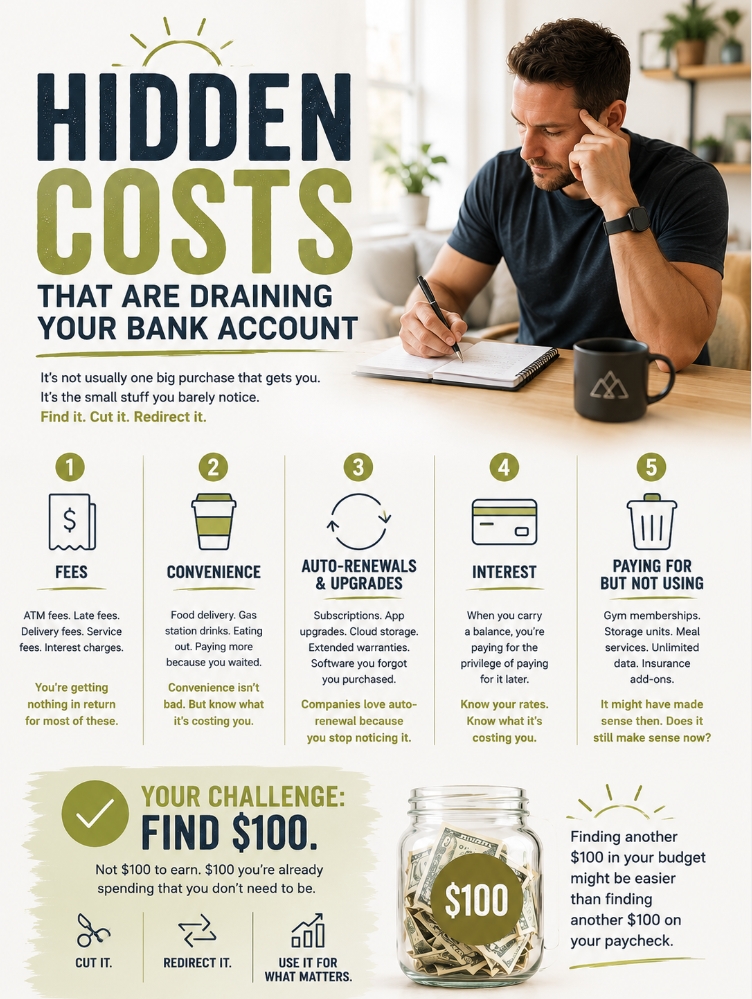
A few subscriptions that automatically renew every month.
Another food delivery because you didn’t feel like going out.
None of those purchases feel like a huge financial decision.
That’s exactly why they’re easy to overlook.
Spend $10 unnecessarily five times during the week and that’s $50.
Do that every week and you’re talking about roughly $200 a month.
That doesn’t mean you can never buy coffee or order food again.
That’s not the lesson.
The lesson is to understand where your money is going.
Small purchases are still purchases.
Learn the Difference Between “I Can Buy It” and “I Can Afford It”
This is one of the biggest financial lessons you can learn early.
Having enough money in your bank account to buy something doesn’t necessarily mean you can afford it.
If you have $400 in your account and something costs $300, technically you can buy it.
But what happens tomorrow?
Do you need gas?
Do you have a phone bill coming?
Are you going out with friends this weekend?
When do you get paid again?
Do you have anything in savings?
Being able to complete the transaction isn’t the same thing as being able to afford the purchase.
Give yourself some breathing room.
You don’t need to spend your account down to $4.72 every time you get paid.
Be Careful With Your First Credit Card
At some point, you’re probably going to be offered a credit card.
Used correctly, a credit card can be a useful financial tool and can help you begin establishing credit.
But understand something from the beginning:
Your credit limit is not your money.
If a credit card company gives you a $1,000 limit, you didn’t just receive $1,000.
You received the ability to borrow up to $1,000.
And borrowed money has to be paid back.
Ideally, don’t put something on a credit card unless you already have a realistic plan to pay for it. Learning that lesson early can save you from spending years trying to pay for things you bought months or even years ago.
Don’t Spend Tomorrow’s Paycheck Today
Another easy trap is assuming more money is coming.
You know you’re getting paid Friday, so you spend money Wednesday.
You’re scheduled for overtime next week, so you buy something today.
You’re expecting birthday money, a bonus, or a tax refund, so you’ve already decided how you’re spending it.
Try to avoid that habit.
Make decisions with the money you actually have, not the money you’re expecting to have.
Plans change.
Hours get cut.
Unexpected expenses happen.
Having some margin makes those situations a lot less stressful.
Have Some Fun With Your Money
This part matters too.
Saving money doesn’t mean you need to become miserable.
You worked.
Enjoy some of what you earned.
Go out with your friends.
Buy the shoes.
Get the coffee.
Save up for something you really want.
There’s nothing wrong with spending money on things that make you happy.
The goal isn’t to never spend.
The goal is to spend intentionally.
There’s a big difference between deciding to spend $50 because you’ve planned for it and spending $50 five different times without realizing how quickly it’s adding up.
Your First Paycheck Is Bigger Than the Dollar Amount
Your first job is teaching you how to show up on time, work with other people, take responsibility, solve problems, and earn your own money.
Let it teach you how to manage that money too.
Start small.
Save something from every paycheck.
Know what bills and responsibilities you have.
Pay attention to the little purchases.
Be careful with debt.
And leave yourself some money to enjoy.
You don’t need to have everything figured out at 18, 19, 20, or even 25 years old.
Most people don’t.
But you can start building good habits now.
Because one of the most important things you can learn from your first job isn’t simply how to earn money.
It’s how to keep some of it.
Your paycheck isn’t just spending money.