Saving money can feel difficult when you’re already trying to keep up with bills, groceries, kids, and everything else life throws at you.
But building savings doesn’t have to start with hundreds of dollars.
It starts with creating the habit.
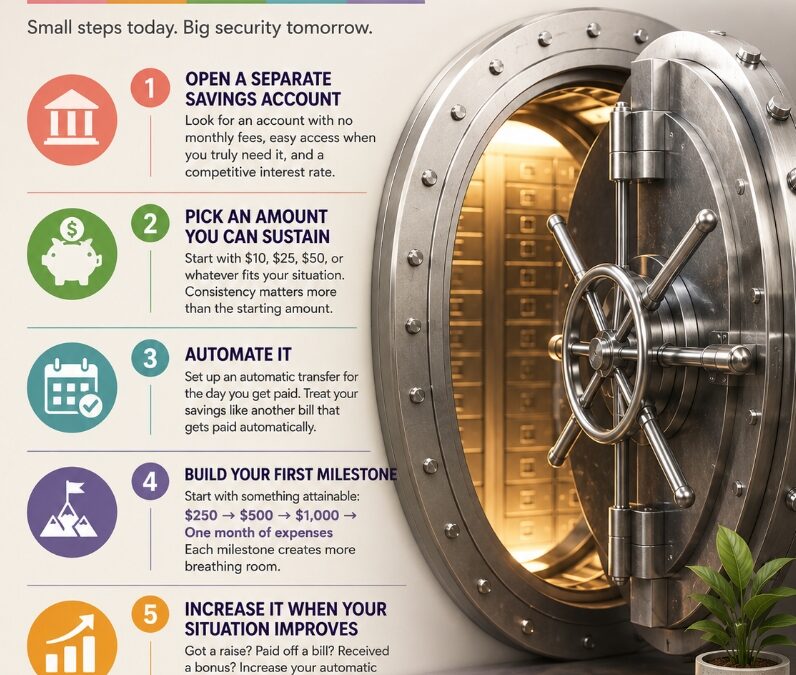
1. Open a separate savings account
If you don’t already have one, start there. Keeping savings separate from your everyday spending account creates a boundary between money you’re planning to spend and money you’re trying to keep.
Look for an account with no monthly fees, easy access when you truly need it, and a competitive interest rate.
2. Pick an amount you can actually sustain
Don’t decide you’re going to save $500 every month if that means you’ll be transferring $400 back out two weeks later.
Start with $10, $25, $50, or whatever fits your current situation.
Consistency matters more than the starting amount.
3. Automate it
Set up an automatic transfer for the day you get paid.
When saving depends on remembering to do it at the end of the month, there’s often nothing left. Treat your savings like another bill that gets paid automatically.
4. Build your first milestone
Don’t immediately worry about having six months of expenses saved.
Start with something attainable:
$250 → $500 → $1,000 → One month of expenses
Each milestone creates a little more breathing room between an unexpected expense and using a credit card.
5. Increase it when your situation improves
Got a raise? Paid off a bill? Received a bonus?
Before all of that additional money becomes part of your lifestyle, increase your automatic savings.
Even another $10–$20 per paycheck adds up over time.
The goal isn’t to become financially secure overnight.
The goal is to create a system where saving money becomes normal.
Start small. Automate it. Leave it alone. Keep building.
Your first $100 saved may not feel life-changing, but the habit that got you there can be.