Not all carbohydrates hit your body the same way.
When we eat carbohydrates, they’re broken down into glucose and enter the bloodstream. Your body then releases insulin to help move that glucose where it needs to go.
But the speed and size of that rise can look very different depending on the carb.
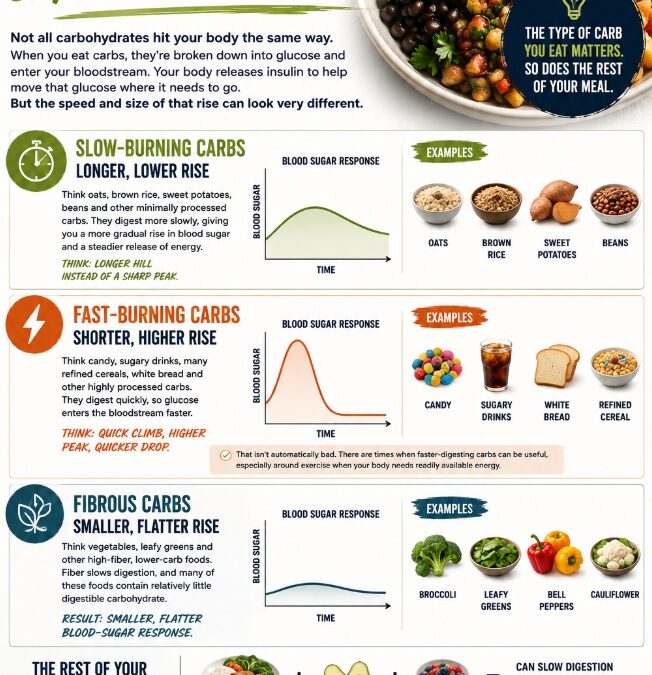
Slow-Burning Carbs — Longer, Lower Rise
Think oats, brown rice, sweet potatoes, beans and other minimally processed carbs.
They generally digest more slowly, giving you a more gradual rise in blood sugar and a steadier release of energy.
Think: longer hill instead of a sharp peak.
These are the carbs I want making up a good portion of your carbohydrate intake, especially when you need energy that lasts.
Fast-Burning Carbs — Shorter, Higher Rise
Think fruit, honey, sports drinks, white rice, some cereals and other faster-digesting carbohydrates.
They’re digested more quickly, so glucose can enter the bloodstream faster.
Think: quick climb, higher peak, quicker drop.
That isn’t automatically bad.
Sometimes we WANT fast energy.
Around training is a perfect example. Before or during longer or harder exercise, fast-burning carbs can give you readily available fuel. After training, they can also help replenish the carbohydrate your muscles used during exercise.
Context matters.
Candy sitting at your desk and a sports drink halfway through a 90-minute workout might both contain fast-burning carbohydrates, but they’re being used for two completely different reasons.
Fibrous Carbs — Smaller, Flatter Rise
Think vegetables, leafy greens, broccoli, peppers, cauliflower and other high-fiber, lower-carbohydrate foods.
Fiber slows digestion, and many of these foods contain relatively little digestible carbohydrate to begin with.
The result is generally a smaller, flatter blood-sugar response.
These are foods I want showing up consistently throughout your day.
They provide fiber, vitamins, minerals and volume without adding a huge amount of calories.
Timing and Usage Matter
Instead of asking “Are carbs good or bad?”, ask:
“What do I need this carbohydrate to do for me?”
Need sustained energy?
Lean toward slow-burning carbs.
Getting ready to train or need energy quickly?
A faster-burning carb may make more sense.
Just finished a hard training session?
Fast or moderate-digesting carbs paired with protein can help begin the recovery process.
Building your normal meals throughout the day?
Start with protein, include fibrous carbs and then add slow-burning carbs based on your activity level and goals.
Sitting most of the day?
You probably don’t need the same amount or type of carbohydrate as someone about to train for 90 minutes.
That’s why I don’t like labeling foods as simply good or bad.
The food matters.
The amount matters.
The timing matters.
And what you’re asking your body to do matters.
You don’t need to be afraid of blood sugar going up after you eat carbohydrates.
That’s normal physiology.
Understand the different tools you have and use the right one at the right time.