Chicken thighs get a bad reputation because they’re higher in fat than chicken breast. The truth? That extra fat is exactly why they taste better, stay juicier, and are harder to overcook.
The goal isn’t to avoid chicken thighs—it’s to build the rest of the meal intelligently.
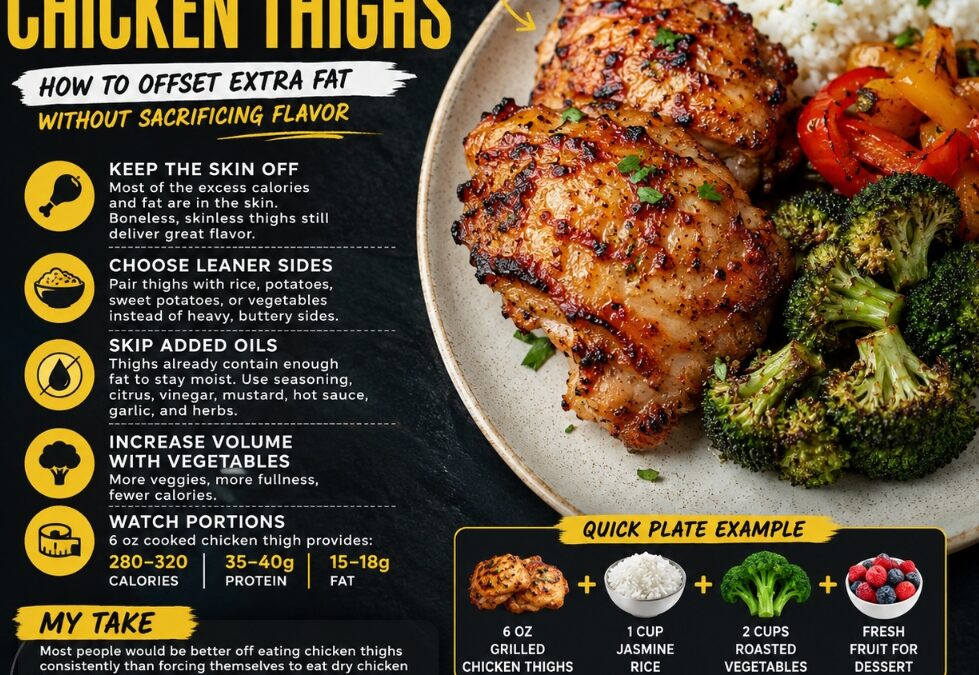
How to Offset the Extra Fat
Keep the skin off
- Most of the excess calories and fat are in the skin.
- Boneless, skinless thighs still deliver great flavor with significantly less fat.
Choose leaner sides
- Pair thighs with rice, potatoes, sweet potatoes, or vegetables instead of buttery sides, mac and cheese, or fries.
- Let the thigh be your fat source for the meal.
Skip added oils
- Thighs already contain enough fat to stay moist.
- Use seasoning, citrus, vinegar, mustard, hot sauce, garlic, and herbs instead of extra oil-heavy marinades.
Increase volume with vegetables
- Add broccoli, green beans, asparagus, peppers, zucchini, or a large salad.
- More food, more fullness, fewer calories.
Watch portions
- 6 oz cooked chicken thigh provides roughly:
- 280-320 calories
- 35-40g protein
- 15-18g fat
For many people, that’s a perfect protein serving without needing additional fats at that meal.
My Take
Most people would be better off eating chicken thighs consistently than forcing themselves to eat dry chicken breast they don’t enjoy. Adherence beats perfection every time.
Calories determine weight.
Macros determine body composition.
Food quality determines how you feel.
If chicken thighs help you stay on track, keep them in the rotation—just build the plate around them.
Quick Plate Example
6 oz grilled chicken thighs
1 cup jasmine rice
2 cups roasted vegetables
Fresh fruit for dessert
High protein. Great flavor. Easy to sustain.
Tasty Challenge:
Swap one “diet food” you don’t enjoy this week for a higher-flavor option that still fits your calories and macros. You’ll be surprised how much easier consistency becomes.