It’s usually not one big purchase that gets you.
It’s the small stuff you barely notice.
$4 here.
$8 there.
A fee you didn’t know you were paying.
An upgrade you don’t really need.
Individually, none of them feel like much. Add them up over a month or a year and it’s a different story.
Here are a few places to look:
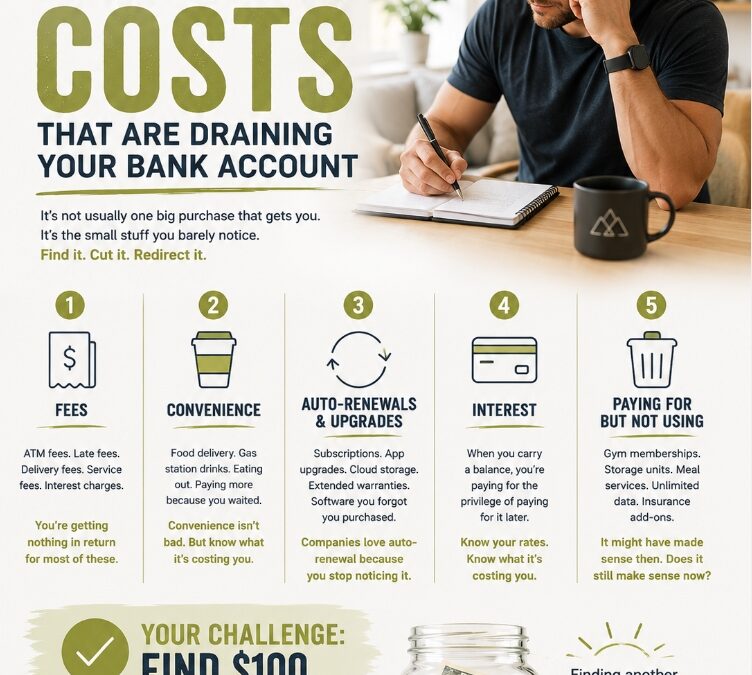
1.) Fees
ATM fees. Late fees. Delivery fees. Service fees. Interest charges.
You’re getting absolutely nothing in return for most of these.
Look through your last month of transactions and see how much you’re actually paying in fees.
2.) Convenience
Food delivery.
Gas station drinks.
Buying lunch because you didn’t pack anything.
Paying more because you waited until the last minute.
Convenience isn’t bad. Sometimes it’s worth paying for.
But know what it’s costing you.
3.) Auto-Renewals and Upgrades
We talked about subscriptions last week, but look beyond Netflix and Spotify.
Extra cloud storage. Premium versions of apps. Extended warranties. Membership upgrades. Software you forgot you purchased.
Companies love auto-renewal because eventually you stop noticing it.
4.) Interest
This one can quietly become a monster.
When you carry a credit card balance, you’re not just paying for what you bought.
You’re paying for the privilege of paying for it later.
Know your interest rates and how much they’re costing you every month.
5.) Things You’re Paying For But Not Using
The gym membership.
The storage unit.
The meal service.
The unlimited data plan.
The insurance add-on.
It might have made sense when you signed up. That doesn’t mean it still does.
Here’s your challenge:
Go through your bank and credit card statements and find $100.
Not $100 to earn.
$100 you’re already spending that you don’t need to be.
Cut it.
Redirect it toward debt, savings or something that actually matters to you.
Finding another $100 in your budget might be easier than finding another $100 on your paycheck.