We talk about protein all the time.
Eat more protein. Get protein with every meal. Have a high-protein breakfast.
Cool.
But what does 25–30 grams of protein actually look like?
Because unless you’re weighing and tracking everything you eat, “get more protein” isn’t very helpful advice.
The good news is you don’t need to walk around with a food scale for the rest of your life. Learn what a few common portions look like, and estimating your protein becomes a whole lot easier.
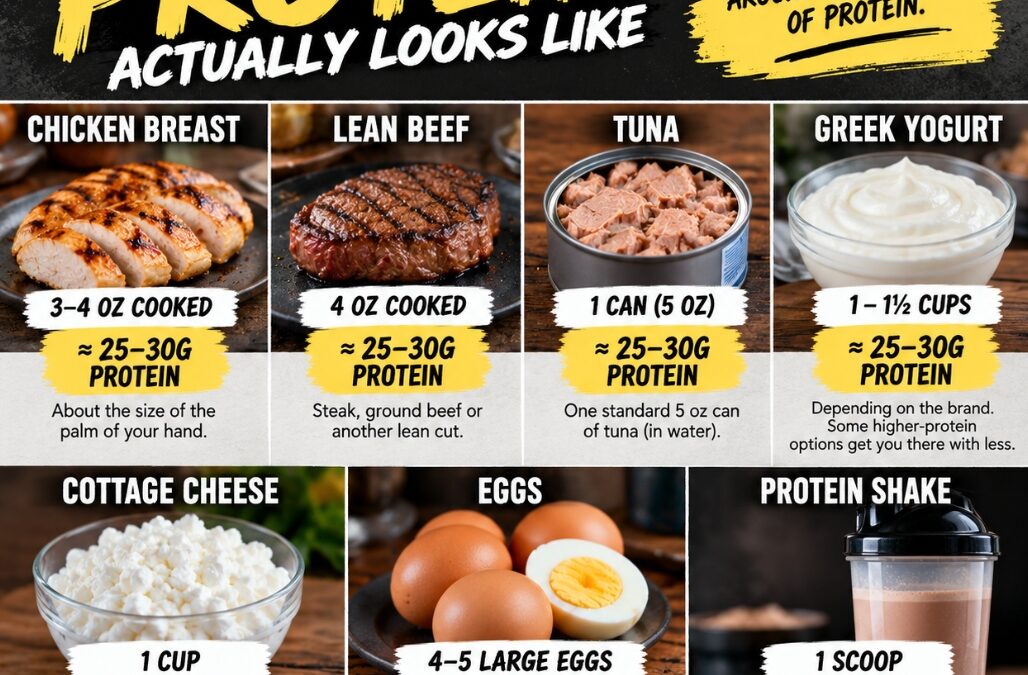
Here are some simple examples. Exact numbers will vary a little by brand, preparation and serving size, but these will get you close:
🍗 Chicken Breast
About 3–4 ounces cooked = roughly 25–30g protein
That’s around the size of the palm of your hand. You don’t need a 12-ounce chicken breast at every meal to get a solid serving of protein.
🥩 Lean Beef
About 4 ounces cooked = roughly 25–30g protein
Ground beef, steak or another lean cut can get you there pretty quickly. The amount of fat and calories can change significantly depending on the cut, so leaner doesn’t necessarily mean “better,” but it can make hitting protein easier without adding as many calories.
🐟 Tuna
One standard 5-ounce can of tuna = roughly 25–30g protein
This is one of the easiest inexpensive proteins to keep around. Throw it into a wrap, sandwich, salad or eat it with crackers and fruit when you need something fast.
🥛 Greek Yogurt
Depending on the brand, around 1–1½ cups can provide roughly 25–30g protein.
Some higher-protein Greek yogurts can get you there with even less. This is where reading the label for 10 seconds actually pays off.
🥣 Cottage Cheese
Around 1 cup = roughly 25g protein
It’s cheap, easy and requires absolutely no cooking. Add fruit, use it as a side, or eat it however you prefer.
🥚 Eggs
One large egg has about 6g of protein.
So you’d need roughly 4–5 whole eggs to get into the 25–30g range.
You can also combine whole eggs with egg whites if you want more protein without adding as much fat. For example, a couple whole eggs plus egg whites can easily get breakfast into that 25–30g range.
🥤 Protein Shake
One scoop of most protein powders = around 20–30g protein.
It doesn’t get much easier than this. Add water or milk, shake it up and you’re done. Protein shakes aren’t magical and they don’t need to replace real food, but they’re incredibly convenient when you’re busy.
And that’s really the point.
Protein doesn’t have to be complicated.
You also don’t have to get all 30 grams from one food.
Maybe breakfast is eggs and Greek yogurt.
Lunch is a turkey sandwich with some cottage cheese.
Dinner is chicken, rice and vegetables.
A snack might be Greek yogurt or a protein shake.
You’re simply building meals where protein isn’t an afterthought.
For most people, a good place to start is looking at the meal in front of you and asking:
“Where’s my protein?”
If you can’t easily answer that question, there’s probably an opportunity to improve the meal.
You don’t need perfection.
You don’t need to weigh every piece of chicken.
And you definitely don’t need to live on protein shakes.
Learn what a reasonable serving looks like, get a quality protein source into your meals consistently, and make nutrition a little easier instead of making it more complicated than it needs to be.